





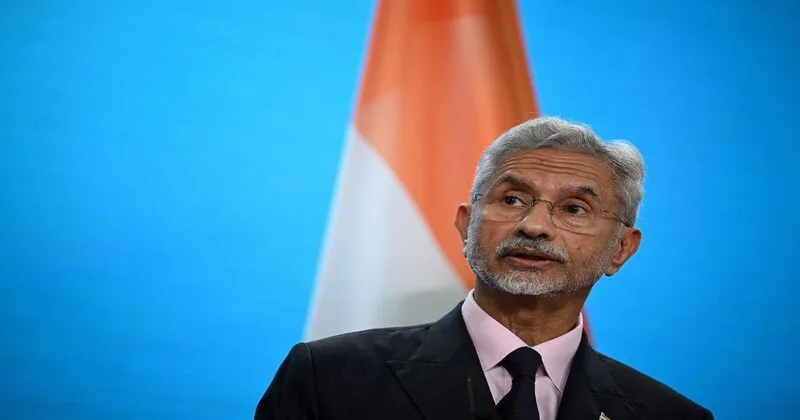
A trade agreement between India and the United States could be finalised in the near future, External Affairs Minister S. Jaishankar said on Saturday, while cautioning that diplomatic negotiations remain inherently unpredictable and sudden reversals are always possible. He underlined that India would firmly safeguard its national interests even as discussions continue.
Speaking to the media at the HT Leadership Summit, Jaishankar noted that both countries believe there is scope to arrive at a mutually acceptable outcome on trade. However, he emphasised that negotiations would be tough and closely evaluated from India’s perspective. According to him, the interests of India’s workers, farmers and middle class would be the guiding principles in assessing any agreement with Washington, and New Delhi would approach such negotiations with considerable care and judgment. Rejecting suggestions of a communication gap between India and the US, the external affairs minister stressed the importance of sustained engagement to address existing differences. He described trade as the most consequential issue shaping contemporary India–US relations and expressed confidence that both sides could eventually reach a reasonable point of convergence.
Jaishankar said trade negotiations between the two countries had already gone through several rounds, and the remaining question was when a final political call would be taken and under what conditions. While he indicated that a deal could materialise soon, he also acknowledged the possibility of delays, noting that diplomacy often unfolds in unpredictable ways and outcomes can shift rapidly, sometimes even within a short span of time. He declined to commit to any timeline for concluding the agreement, observing that diplomats generally remain optimistic but must also account for unexpected developments that can abruptly change the course of negotiations.
Commenting on the broader political context, Jaishankar noted that every American president brings a distinct style to foreign policy, and that President Donald Trump’s approach differed markedly from that of his predecessors. Under Trump’s presidency, trade imbalances have figured prominently in Washington’s engagement with New Delhi.Trump has repeatedly highlighted the US trade deficit with India, and the two sides have engaged in sustained and often difficult negotiations over recent months in pursuit of a comprehensive trade arrangement. Despite progress in some areas, significant differences remain unresolved.
One of the central points of contention has been India’s resistance to opening up sensitive sectors such as dairy and poultry to foreign competition. The United States has also been pressing India to expand market access for American agricultural products, including corn, soybeans, wheat, ethanol, fruits and nuts. Given India’s agrarian economic structure, New Delhi has been cautious in responding to these demands.The Indian government has previously described some of these proposals as crossing a “red line,” particularly concerns related to genetically modified crops. The US primarily cultivates GM corn and soybeans, while India does not permit the import of genetically modified food crops, citing risks to human health and environmental sustainability.
Dairy remains another highly sensitive area, as the sector provides livelihoods to millions across the country. A large number of small and landless farmers depend on dairy income to cope with irregular monsoons and fluctuations in agricultural output. Prime Minister Narendra Modi has, on multiple occasions, reiterated that India would not compromise on the interests of its farming community in trade negotiations.













Comments