





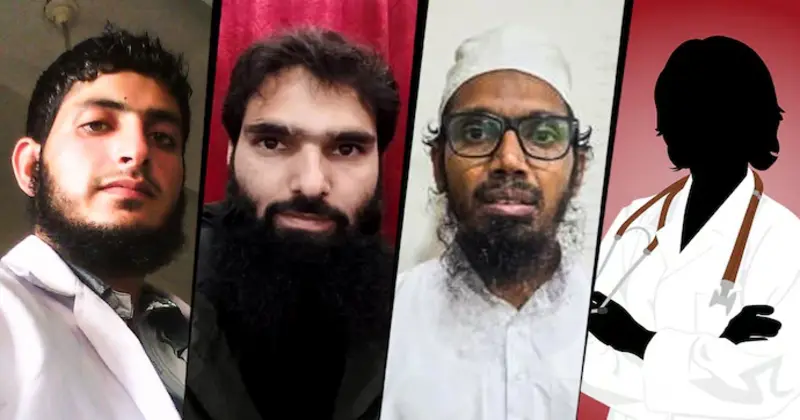
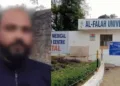
The parallels between Al-Shifa Hospital in Gaza and Al-Falah University in Faridabad reveal a disturbing pattern of how terrorist organizations systematically exploit trusted civilian institutions for terrorist activities. In November 2023, intelligence confirmed that Gaza-based Islamist terror organisation, namely, Hamas used Al-Shifa Hospital, Gaza’s largest medical facility as a command and control node, storing weapons in underground tunnels and holding Israeli hostages, effectively weaponizing a protected civilian space under international law. Just two years later, this blueprint manifested in India when Al-Falah University in Faridabad emerged as the nerve center of a Jaish-e-Mohammed terror module responsible for the November 10, 2025, Delhi Red Fort blast that killed 15 people. Investigators discovered that the 70-acre campus, established in 1997 and granted university status in 2014, had become “ground zero for radicalized professionals”, specifically doctors who taught MBBS students while stockpiling 350-360 kg of explosives, assault rifles and bomb-making materials.
The value of these “medical-radicals” to organizations like Jaish-e-Mohammed and ISIS/ISKP is threefold. First, they possess invaluable social camouflage. A doctor in a lab coat, a professor at a university or a well-paid IT engineer moves through society with a level of trust and respectability that provides the perfect operational cover. Second, they bring technical, self-provisioning skills, a doctor’s knowledge of chemicals, an engineer’s understanding of circuitry or an IT professional’s ability to navigate encrypted communications and cryptocurrency. Third, they are often self-financing, capable of using their professional incomes to fund operations, thus reducing the financial burden on the parent organization.
This strategy is not new, it is an evolved and perfected model. The historical prototype was the Indian Mujahideen(IM), which was responsible for a devastating series of coordinated blasts in India. The IM’s leadership structure established the white-collar terror template. Its co-founders included Abdul Subhan Qureshi, a software engineer who served as the group’s bomb-making expert Sadiq Israr Sheikh, a programme engineer and Dr. Shahnawaz, a unani doctor. These men were not uneducated or destitute, they were educated, urban, middle class professionals who were systematically recruited and deployed by their Pakistan-based handlers to wage war against the Indian state.
The 2014 arrest of Mehdi Masroor Biswas stands as one of India’s most chilling examples of how educated professionals have become force multipliers for global jihadist movements through sophisticated digital operations. Biswas, a 24-year-old electrical engineer from West Bengal working as a manufacturing executive at ITC Foods in Bengaluru with an annual package of ₹5.3 lakh, operated the Twitter handle @ShamiWitness the single most influential pro-ISIS account globally with over 17,700 followers and tweets viewed 2 million times monthly. Biswas, while maintaining his corporate day job, spent nights consuming 60GB of monthly internet data, aggregating breaking news from ISIS/ISIL-controlled territories and becoming “particularly close to English-speaking ISIS terrorists” as a “source of incitement and information for new recruits trying to join ISIS”.
Radicalization in Pakistan’s higher education institutions
To understand how these educated professionals are weaponized, one must first analyze the ideological engine that primes them. Surprisingly, two critical academic papers on radicalization within Pakistan’s universities, authored by Pakistani researchers and both published by Routledge, provide the mechanism and the evidence for this priming process.
The first paper, “Drivers of violent extremism in higher education institutions of Pakistan (2020)”, argues that the post 9/11 focus on madrassas as the sole source of extremism is a critical error. The author notes that “incidents of violence involving university students are a historic phenomenon in Pakistan, but the tendencies of violent clashes and recruitment of university students in violent extremism are increasing”. The new hotbeds for radicalization are modern, public universities.
The paper provides a crucial comparative analysis of two public universities in Islamabad: Quaid-i-Azam University(QAU) and the International Islamic University Islamabad (IIUI). It finds that while QAU is dominated by politically motivated ethnic groups, the IIUI is fundamentally different. At IIUI, students are exposed to “religiously motivated content, violence, and recruitment”. This is attributed to two factors: many students arrive with pre-existing madrassa backgrounds, and most critically, the dominance of groups like the Islami Jamiat-e-Talaba(IJT) Pakistan.
Academic analysis from the authors explicitly argues that the “overwhelming focus of research on madrassas led to the countering violent extremism(CVE) projects focusing on madrassa reforms, ignoring the drivers of violent extremism(VE) in modern educational institutions”. The very “seats of higher learning have become the instrument of latent radicalism”. A majority (59 per cent) of participants reported having witnessed violent clashes involving students from their university. Of those who witnessed violence, 55 per cent reported seeing incidents on their university campuses, and 40 per cent saw them in student hostels. Approximately one-fifth of all participants reported seeing extremist and/or hate material (pamphlets, speeches promoting jihad or armed struggle) available on their campuses. IIUI participants showed greater vulnerability, with 35.71 per cent agreeing to having seen extremist material, compared to QAU students. This is attributed to the religious inclinations and madrassa backgrounds of many IIUI students and the dominance of groups like the Islami Jamiat-e-Talaba (IJT)
This is not a new phenomenon. The evidence of this trend is found in a string of high-profile cases involving educated, non-madrassa-class individuals as well:
- Saad Aziz: A graduate of the elite Institute of Business Administration (IBA) in Karachi, who was found to be running an Al-Qaeda sleeper cell and was involved in targeted killings.
- Naureen Leghari: A medical student from Liaquat University of Medical Science, who became an Islamic State (IS) affiliate and was arrested for planning an attack.
- Tashfeen Malik: A graduate of a public sector university in South Punjab, who, along with her husband, perpetrated the 2015 San Bernardino attack in the United States.
These cases illustrate that “this lot does not come from the shabby and poor madrassa class, but from the shiny classrooms of the modern universities”. This reality has created a significant gap in counter-terrorism policy, as modern secular university campuses have become harder to track than the madrassas, which are under enhanced government surveillance.
The IJT, the student wing of the far-right political party Jamaat-e-Islami, is not a passive student club. The paper notes that IJT “attempts to enforce a particular far-right political ideology on campus”. This is the core of the systematic process. The IJT and its parent party have a documented history of involvement in the “radicalization and recruitment of university students for jihad in Afghanistan”. This environment serves as a powerful feeder mechanism. This on-campus indoctrination creates a pool of educated, technically proficient and ideologically vulnerable individuals.
The second paper, “Emerging trends of on-campus radicalization in Pakistan (2021)”, provides quantitative proof of this vulnerability. This paper details the shocking findings of a survey of 440 students from six major public universities in Islamabad, including supposedly secular-reputation institutions. The study argues that education alone does not prevent radicalization, noting that among nearly 500 suspects detained by security officials in Sindh, 70 held bachelor degrees and 64 held master’s degrees.
The data reveals, when asked about the anti-war on terror stance (WoT), a solid majority (277) students opposed Pakistan’s decision to side with the US on global WoT. The support for ideological notions are also strong, with as high as 83.6 per cent of students responding in favor of the concept of Ummah. Of those, 76.1 per cent recognized Ummah as a religious concept. This concept, which places a global religious identity above the nation-state, is a foundational “pull factor” for transnational jihadist groups. A high percentage of respondents from secular universities (72.0 per cent) favored Shariah as the source of law in Pakistan, implying dissatisfaction with the prevailing politico-economic system.
Most importantly, when asked who “best serves the cause of Islam”, 12.0 per cent of these elite university students, one in eight, selected non-state-actors, including the Taliban, Al-Qaeda, TTP and IS. This quantitative data proves that the ideological engine is working. Pakistan’s HEIs, under the influence of organized, far-right groups, are systematically producing a significant cohort of educated professionals who are already ideologically primed for recruitment by terrorist organizations.
Jaish-e-Mohammed and the 2025 Delhi Blast
The 2025 Jaish-e-Mohammed (JeM) module targeting Delhi revealed a sophisticated operation combining traditional command with modern recruitment. The plot aimed for a 26/11-style, multi-target assault on the December 6 Babri Masjid demolition anniversary, intending to trigger communal division. This module’s structure showed operative Irfan Ahmad Wagay in direct encrypted contact with JeM chief Masood Azhar, supplemented by international handlers based in Turkey. Concurrently, JeM launched a digital initiative, an online course named “Tufat al-Muminat”, to recruit for its women’s brigade, with classes run by Masood Azhar’s sister.
The involvement of educated professionals in such plots is not a new phenomenon but follows established historical precedents in India. The first systematic wave of white-collar terrorism came from the Indian Mujahideen(IM), a SIMI offshoot that was founded in 2003 and emerged operationally between 2005-2007. IM’s leadership consisted of educated, urban, middle-class professionals who weaponized their technical skills. Key figures included software engineer Abdul Subhan Qureshi, its bomb-making expert; engineer Sadiq Israr Sheikh, a co-founder and recruiter and Dr. Shahnawaz, a Unani doctor. Recruiting from “prosperous but socially conservative” families in Bhatkal and Azamgarh. The IM’s operational capacity was effectively broken by the 2008 Batla House encounter and the 2013 arrest of Yasin Bhatkal.
A second, methodologically different wave of professional recruitment was pioneered by ISIS and its regional affiliate, the Islamic State Khorasan Province (ISKP, formally established in January 2015), between 2014 and 2019. Unlike the physical handler networks of JeM or IM, ISIS and ISKP excelled at remote, digital radicalization through encrypted platforms like Telegram and Signal and propaganda magazines like Dabiq (published 2014-2016) to attract recruits to its transnational “Caliphate” project. This approach was most successful in Kerala, India’s primary ISIS/ISKP recruitment ground during this period, with 100-120 individuals joining or attempting to join. The Kerala modules were led by professionals like engineer Abdul Rashid and engineering graduate Shajeer Mangalassery, who directed operations from Afghanistan via secret chat groups. This digital-first recruitment model remains a persistent threat, as evidenced by the 2025 radicalization of Dr. Ahmed Mohiyuddin Saiyed (prime suspect of Ricin terror conspiracy, consequently arrested by Gujarat ATS) through social media.
The White Terror Module responsible for the November 10, 2025, Delhi Red Fort blast, which killed 15 people, is the apex case study of this transnational pipeline in action. It represents a tragic synthesis of the ideological supply from Pakistan and the operational demand to break India.
The investigation uncovered a sophisticated white-collar terror ecosystem operating from a “nerve center” at Al-Falah University in Faridabad. The module’s “command post” was identified as Room number 13 in Building 17 of the university’s boys’ hostel.
- The Suicide Bomber: Dr. Muhammad Umar (Umar Un Nabi), an Assistant Professor at Al-Falah University’s medical college who was also involved in recruitment and radicalization activities.
- The Logistics Chief: Dr. Muzammil Ahmad Ganaie, 35, a junior resident doctor in the emergency wing at Al-Falah Medical College, who was arrested on October 30 after police recovered 350 – 360 kg of explosives, a Krinkov assault rifle, timers, remote controls, and other bomb-making materials from his rented accommodations in Faridabad.
- The Recruiter & Financier: Dr. Shaheen Sayeed, Assistant Professor at Kanpur’s Ganesh Shankar Vidyarthi Memorial Medical College, tasked with establishing Jamaat-ul-Momineen, the women’s wing of the terrorist group Jaish-e-Mohammed.
- The Insider: Dr. Nisar-ul-Hassan, a professor in the Department of Medicine at Al-Falah University. In a stunning example of institutional failure or complicity, he was hired by the university after having been dismissed by the Jammu and Kashmir Lieutenant Governor on November 21, 2023, under Article 311(2)(c) of the Constitution for promoting secessionist propaganda and posing a threat to state security.
This module was not acting alone. It was being run by the larger force Jaish-e-Mohammed. The module’s orchestrator, Maulvi Irfan Ahmad Wagay, represents the perfect hybrid of this new terror model. He was both an Imam at a mosque in Shopian and a former paramedical staff member at Government Medical College Srinagar. Intelligence probes have verified a critical operational nexus regarding the module’s weaponry. Wagay established a systematic link with the remnants of Ansar Ghazwat-ul-Hind (AGuH), the Al-Qaeda affiliate in Kashmir. Following the decimation of AGuH’s leadership, Wagay facilitated the absorption of their dormant logistical assets into the JeM network.
The link to Pakistan is not theoretical, it is direct and absolute. Maulvi Wagay was in direct contact with JeM handlers in Pakistan, including its founder, the UN-designated terrorist Maulana Masood Azhar, using three separate encrypted apps, including Threema.
Need for a hawk-eye on university activities and de-radicalisation of campuses in India
What this episode means for India is clear: we must usher in a new and more vigilant paradigm of internal security. The prevailing reluctance to allow police presence on university campuses unless in extremist cases, can no longer remain sacrosanct, especially when the white-collar terror module has exposed how sophisticated, educated actors exploit academic spaces to radicalise and mobilise. Recent investigations into Al-Falah University, where doctors allegedly linked to the Red Fort blast were employed, demonstrate how educational institutions can be co-opted as hubs for terrorism.
Accordingly, the government should actively identify and monitor such “provocative spaces”, whether it be Islamic Jihadist or Urban Naxals as Union Home Minister, Amit Shah has reiterated the government’s vow to eliminate Naxalism by March 31, 2026, calling the fight against Left-Wing Extremism (LWE) in its final phase bringing them under consistent scrutiny. At the same time, vigilance needs to be broadened to include not only professional institutions but also madrassas and religious seminaries, places where conservative theological indoctrination may sow the seeds of radicalism from an early age. It is also important for citizens to recognise that they see only a small fraction of what national security agencies actually do. In most cases, the public is aware of barely five percent of ongoing counter-terror operations, while the remaining work happens silently through intelligence gathering, surveillance, coordination between multiple agencies and preventive action that never reaches the headlines. This unseen effort is what often prevents attacks and safeguards millions without them ever knowing the threats that were neutralised.
Further, to immunise our future generations against extremism, we should integrate national and ethical values into the university curriculum, instilling not just patriotism but a lived sense of civic duty. Universities should also adopt effective de-radicalisation programs that identify at-risk students early, provide counselling and mentorship and create channels for dialogue that counter misinformation and extremist narratives. Such programs help students build critical thinking, emotional resilience and a deeper understanding of democratic responsibilities, reducing the appeal of radical ideologies. Nationalism must transcend ceremonial acts like singing the anthem; it must become part of our identity, reflected in how we study, debate and live. In today’s world, where some young students may be more absorbed in self-discovery than in collective purpose, it’s vital that higher education becomes a space not only for intellectual growth, but also for nurturing a strong, responsible sense of belonging to the nation.









Comments