





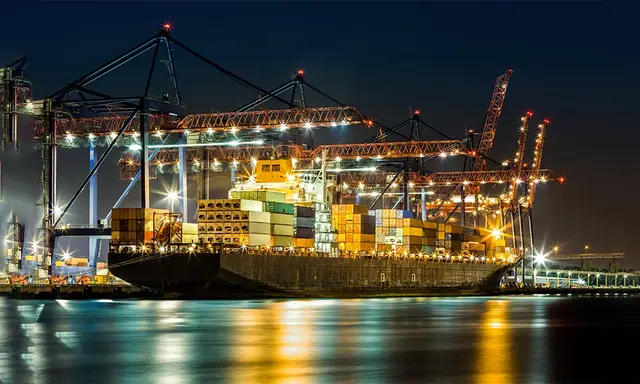
Swadeshi is often misunderstood as a nostalgic call to return to the past. In the 21st century, however, Swadeshi is neither isolationism nor anti-trade sentiment. It is a strategic economic doctrine that focuses on strengthening domestic capabilities, reducing avoidable imports, and positioning India as a globally competitive manufacturing and innovation hub. As India enters Amrit Kaal, the idea of Swadeshi emerges as a national economic necessity, not just a cultural ideal.
India’s Export–Import Reality: The Macro Picture
India today is a major exporter of services and a rising force in merchandise exports.
In FY 2024–25, India’s exports reached US$ 820.93 billion (₹ 72. 89 lakh crores ), marking one of the strongest performances in our economic history. Goods exports accounted for US$ 437.42 billion (₹38. 81 lakh crore), while services brought in US$ 383.51 billion (₹ 34.01 lakh crore). This clearly reflects India’s strengths in IT, pharmaceuticals, engineering goods, chemicals, textiles, and agro-products. However, the challenge lies in imports. India imported US$ 915.19 billion (₹81. 27 lakh crores) worth of goods and services in the same period. Merchandise imports alone stood at US$ 720.24 billion (₹64.80 lakh crore). This has resulted in a trade deficit of US$ 94.26 billion (₹8.36 lakh crore).
The deficit persists not because India is consuming more, but because India is not producing enough in certain critical sectors. This is the main problem, in the sense, India is at loss of 8.36 lakh crores per annum when doing business with world.
The Anatomy of India’s Imports: Where the Money Goes
India’s merchandise import bill for FY 2024-25 crossed a staggering ₹60.28 lakh crore, marking a 6.18% rise over the previous year.
1) The lion’s share — nearly ₹17.63 lakh crore (29.2%) — went to petroleum crude and products.
2) Electronics followed at ₹6.84 lakh crore (11.4%), largely smartphones, components and consumer gadgets, 3) While machinery worth ₹4.17 lakh crore powered the nation’s infrastructure and manufacturing boom.
4) Gold and precious stones drained another ₹4.19 lakh crore from reserves as investment and jewellery demand surged.
5) chemicals (₹3.35 lakh crore) remained indispensable for pharmaceuticals, fertilizers and industry.
6) Coal imports stood at ₹3.25 lakh crore (250 million tonnes).
7) plastics at ₹2.51 lakh crore.
8) Iron & steel at ₹2.09 lakh crore.
9) edible oils at ₹1.26 lakh crore.
10) fertilizers at ₹1 lakh crore.
Together, just the top ten sectors accounted for ₹46.29 lakh crore — a massive 77% of the total import bill — leaving the remaining 23% spread across pulses, aircraft, medical equipment, fruits and countless other items. With five sectors alone (petroleum, electronics, machinery, gold and chemicals) devouring nearly ₹36 lakh crore, or 60% of the entire import expenditure, the scale of India’s external dependence — and the opportunity for strategic import substitution under the Swadeshi and Atmanirbhar vision — has never been clearer
Swadeshi as an Economic Strategy: The ₹15–18 Lakh Crore Roadmap to Atmanirbhar Bharat
Swadeshi is no longer just patriotism—it is India’s sharpest economic weapon in the 21st century. With an annual import bill of ₹60+ lakh crore feeding a persistent trade deficit, a focused sector-wise assault can wipe out 70–80% of that gap by 2030–32 and add 2.5–3% extra GDP growth while creating 3–4 crore skilled jobs.
(1) Energy imports, currently draining ₹21 lakh crore, can be cut by ₹4–5 lakh crore annually through 500 GW renewables, 20% ethanol blending (already achieved), a green hydrogen mission, new domestic oil & gas blocks, and 30% EV penetration by 2030—the single biggest lever.
(2) Electronics & components worth ₹6.84 lakh crore can shrink by ₹3–3.5 lakh crore once 4–6 semiconductor fabs, display & battery PLI 2.0, and design-linked incentives push local value addition from 20% to 60%, slashing the ₹4+ lakh crore China bill.
(3) Gold imports of ₹4.19 lakh crore can be trimmed by ₹1.5–2 lakh crore via ₹1 lakh crore annual Sovereign Gold Bonds, 300-tonne organised recycling, digital gold platforms, and a 5% extra tax on physical bars.
(4) The National Edible Oil Mission can save ₹80,000–1 lakh crore by expanding oil-palm to 10 lakh hectares, doubling mustard yields, and lifting domestic production from 5 MT to 18 MT.
(5) Fertiliser and chemical imports together costing over ₹4 lakh crore can be reduced by ₹70,000–90,000 crore with nano-urea replacing 100% conventional urea, five new mega plants, and domestic rock-phosphate mining.
(6) Defence indigenisation can save ₹1–1.5 lakh crore by mandating 75% capital procurement from Indian vendors by 2027 and banning another 500+ imported items.
(7) Capital goods & heavy machinery imports of ₹4.17 lakh crore can fall by ₹1.5–2 lakh crore through 50% local sourcing in all infra projects and a ₹50,000 crore machine-tool PLI.
(8) Pharma APIs & medical devices worth ₹70,000 crore can be brought home by making three bulk-drug parks and four med-tech parks fully operational and enforcing compulsory licensing on 350 critical molecules.
(9) Toys, furniture, footwear, and lifestyle goods worth ₹1.5–2 lakh crore can be slashed by ₹1–1.2 lakh crore using 200–300% duties, extending QCOs to 500 items, and building dedicated clusters in Uttar Pradesh, Tamil Nadu, and Gujarat.
(10) A new ₹1 lakh crore Recycling & Circular Economy Mission can deliver another ₹1–1.5 lakh crore annual saving by systematically recovering gold, plastics, e-waste metals, lithium, and cobalt.
Add them up and the result is crystal clear: ₹15–18 lakh crore of annual import reduction by 2030–32—enough to virtually eliminate the trade deficit, fund world-class infrastructure, and transform India into a genuine economic superpower. Swadeshi, executed with precision and scale, is the most powerful growth engine India has ever had.
Citizen-Led Swadeshi: How Small Habit Changes Can Slash India’s Import Bill
How 140 Crore Citizens Can Slash the Import Bill by ₹6.55 Lakh Crore – Without Waiting for the Government initiatives.
1. Switch to Indian Beauty & Personal Care (toothpaste, shampoo, soap, cream, deodorant, cosmetics) you attack ₹70,000 crore of imports.
2. Buy Only Indian-Made Clothes & Innerwear (avoid fast-fashion imports & premium foreign brands) you hit ₹1.4 lakh crore of imports.
3. Choose Local Electronics & Accessories (mobile covers, earphones, chargers, power banks – prefer Boat, Noise, Portronics), you target ₹1.8 lakh crore.
4. Shift 1 Meal a Week to Millets & Local Grains (replace imported quinoa, oats, almond milk with ragi, jowar, bajra) , you cut ₹60,000 crore of imported cereals and nuts.
5. Buy Only Indian-Made Footwear & Bags (Bata, Relaxo, Campus, Liberty, Hidesign instead of Nike/Adidas imports) you reduce ₹80,000 crore of footwear imports.
6. When 20% of your wardrobe becomes Khadi or handloom, you slash ₹50,000 crore of synthetic fabric imports.
7. When parents buy Indian toys and families choose Godrej or Nilkamal furniture, you save ₹60,000 crore.
8. When you pick Tata, Mahindra, Bajaj or Royal Enfield over imported luxury cars and bikes, you save ₹1 lakh crore in CBUs and components.
9. When you snack on Haldiram, Bikaji and Amul instead of Ferrero Rocher or Pringles, you cut ₹30,000 crore of imported chocolates and snacks.
10. When you sell old gold jewellery and old phones to authorised recyclers instead of letting them rot in lockers, you attack the biggest import line of all – ₹5 lakh crore of gold and e-waste metals.
At just 5% nationwide adoption: ₹65,500 crore annual import reduction + ₹1–1.3 lakh crore extra GDP + over 1 crore new jobs.
At 25% adoption (one Indian brand out of every four purchases): ₹3.27 lakh crore saved every year – enough to wipe out the entire current account deficit in most years.
At 50% adoption: ₹6.55 lakh crore annual saving – equivalent to building 30 new IITs + AIIMS every single year with the money that stays in India.
Swadeshi & Amrit Kaal Vision 2047
By 2047, India aims to become a US$ 26–30 trillion economy, with high living standards, world-class infrastructure, self-reliance in energy, food, defence, and technology. Every Indian shall be an economist, national builder, patriotic and that is the best way to make Bharat great gain.













Comments