





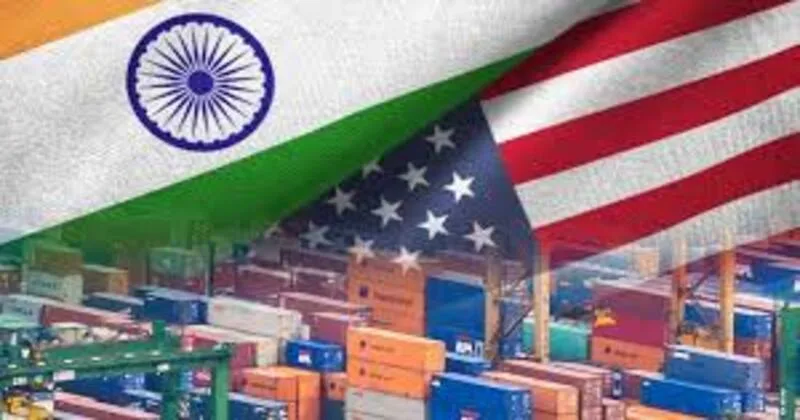
The United States has signalled renewed momentum in negotiations over a long-anticipated trade agreement with India, with a senior administration official noting that recent rounds of talks have produced several favourable developments, according to a media house. In recent weeks, Washington has also softened its previously firm stance on India’s purchases of Russian crude, indicating a broader willingness to rekindle constructive engagement after a prolonged phase of friction and stalled dialogue.
Briefing reporters on Thursday, a senior official said the Trump administration is simultaneously working on two parallel matters with India: a reciprocal trade pact and ongoing concerns related to New Delhi’s continued imports of discounted Russian oil. The official indicated that the atmosphere around discussions has notably improved, with both sides registering progress on key sticking points and showing greater alignment on pending deliverables. According to the official, Washington now sees a clearer pathway for tangible outcomes before the end of the year, though significant technical work remains. The official suggested that the negotiating teams have accelerated the pace of engagement over the past month, describing the forward movement as increasingly reassuring. Even so, the official cautioned that negotiators cannot afford to ease their tempo, emphasising the extensive groundwork still required to finalise mutually acceptable terms.
The proposed reciprocal trade arrangement aims to recalibrate tariffs and widen market access for both economies. This framework seeks to resolve several long-standing irritants, from US concerns over India’s duties on agricultural and industrial imports, to India’s call for the restoration of its preferential trade status under cancelled schemes. New Delhi has also been seeking improved access for Indian services and technology professionals in the American market, a long-pending expectation that will likely feature prominently in the eventual agreement. The comments coincided with the White House unveiling a set of preliminary trade arrangements with four Latin American countries, Argentina, El Salvador, Ecuador, and Guatemala. These deals include tariff concessions on goods that are not produced domestically in the United States. Senior officials described these developments as part of Washington’s broader strategy to pursue focused, bilateral trade partnerships rather than large, multilateral pacts. The administration also cited productive exchanges with Vietnam, Indonesia, and Switzerland, signalling a shift toward more targeted, region-specific economic cooperation.
New envoy’s appointment adds fresh impetus to India–US trade deal efforts
The renewed push toward a bilateral trade breakthrough comes as Sergio Gor, one of US President Donald Trump’s close associates, assumes office as Washington’s new ambassador to India. During Gor’s swearing-in ceremony earlier this week, Trump indicated that tariff reductions on Indian exports could form an integral part of an upcoming trade understanding. He suggested that both sides were nearing an inflection point that could enable a major policy shift.
A comprehensive India–US trade agreement has remained elusive for years, repeatedly running aground over disagreements on tariff structures, data localisation rules, digital-trade governance, and e-commerce regulations. However, the latest signals from both capitals suggest a more pragmatic approach is taking hold, raising expectations that a long-delayed deal may finally advance toward closure.









Comments