





A major controversy has erupted after the MBBS admission list of Shri Mata Vaishno Devi Institute of Medical Excellence in Jammu revealed that 42 out of 50 seats were allotted to Muslim students, with only seven Hindu and one Sikh student admitted. The development has prompted a sharp response from the Vishva Hindu Parishad (VHP) and the Jammu BJP, who have demanded an inquiry into the allocation process, questioning whether the distribution aligns with the intended purpose of the Shrine Board-funded institution.
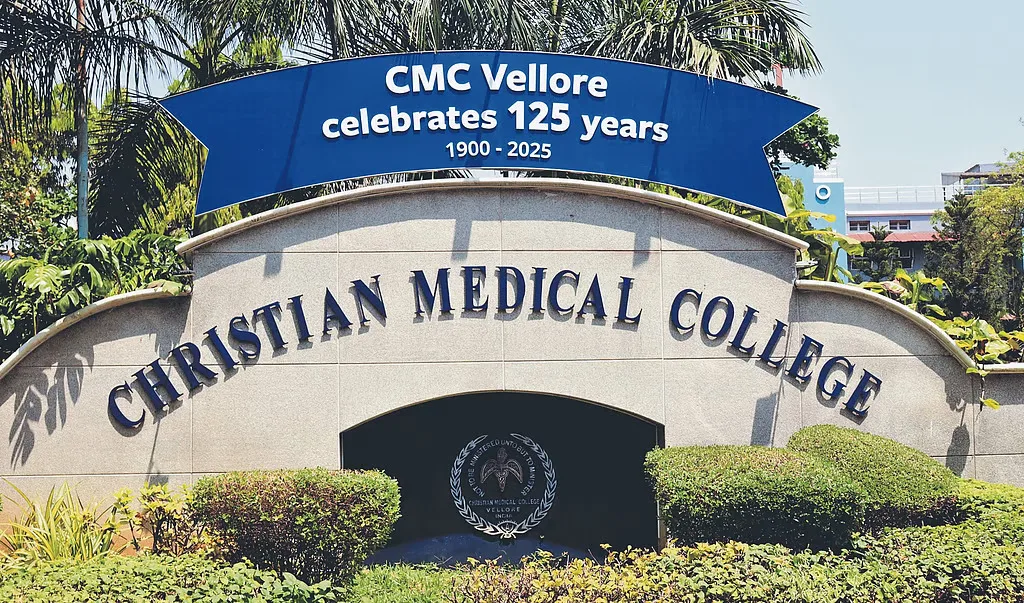
Simultaneously, questions have been raised about the Christian quota system at the Christian Medical College (CMC), Vellore, which reserves a substantial number of seats for Christian students despite admissions being based on the National Eligibility-cum-Entrance Test (NEET).
According to a report, the VHP has accused both institutions of discriminatory practices that contradict the secular ethos of India’s education system.
Vaishno Devi Medical College Row
The Shri Mata Vaishno Devi Institute of Medical Excellence, commonly known as the Vaishno Devi Medical College, began operations in 2025 under the aegis of the Shri Mata Vaishno Devi Shrine Board (SMVDSB). The Rs 500-crore institution was built and is maintained through funds donated by Hindu devotees visiting the shrine. The hospital and medical college were envisioned to serve pilgrims and locals in the Jammu region while promoting inclusive education and healthcare.
However, the MBBS admission list for 2025 triggered widespread outrage when it was revealed that 42 of the 50 seats had gone to Muslim students, while Hindus received just seven seats and one Sikh student was admitted.
The VHP and BJP leaders in Jammu questioned the fairness of the selection process, arguing that a Hindu-funded institution should not marginalise Hindu students. “When the temple trust built this college with donations from Hindu devotees, it’s only fair that Hindu students should not be denied fair representation,” said a local BJP leader.
In response, officials associated with the college clarified that the admissions were strictly merit-based and conducted under the NEET framework, which does not permit religious bias. They maintained that the seat distribution followed national and state-level medical education regulations and was not influenced by religious considerations.
CMC Vellore’s Christian quota under scrutiny
While the Vaishno Devi college controversy continues, the focus has also shifted to Christian Medical College (CMC), Vellore, a century-old private medical institution in Tamil Nadu. Established in 1900 by Dr. Ida Sophia Scudder, daughter of an American missionary, CMC Vellore is one of India’s premier private medical colleges and is classified as a non-aided Christian minority institution.
CMC offers 100 MBBS seats every year, all of which are filled through NEET-UG scores. However, the institution also implements a dual quota structure, a Management Quota and a State Quota, that provides explicit reservation for Christian students.
According to the CMC Vellore 2025–26 Prospectus, 50 percent of seats (50 seats) fall under the Management Quota. Of these, 38 are reserved for Christian candidates, 10 for the CMC staff quota, and only 2 are open seats for general applicants. The remaining 50 percent (50 seats) are allotted under the State Quota, out of which 30% follow Tamil Nadu’s government reservation rules, while 20 percent are reserved for Christian students.
Thus, in practice, nearly 60 percent of all MBBS seats at CMC are reserved for Christian students, a policy that, while legally protected under Article 30 of the Constitution (Minority Institutions’ Rights), continues to invite debate over fairness and inclusivity.
VHP’s Stand: “Is this secularism or selective discrimination?”
Reacting strongly to both developments, VHP National Spokesperson Vinod Bansal raised pointed questions about what he termed “selective secularism and reverse discrimination”.
He said, “It is deeply ironic that a medical college funded by the Shri Mata Vaishno Devi Shrine Board, through donations of Hindu devotees, ends up admitting an overwhelming majority of non-Hindu students. On the other hand, institutions like CMC Vellore openly reserve seats for Christian students under the guise of minority rights. Where does this leave the Hindu community?”
Bansal further questioned the constitutional parity in extending minority protections only to certain groups: “Shouldn’t Articles 29 and 30 also protect Scheduled Castes, Scheduled Tribes, backward classes, and poor sections of Hindu society? Is it not time to end the divisive binary of minority and majority?”
He warned that continued bias under the banner of “secularism” risks alienating the very majority that sustains India’s pluralistic institutions through faith-based donations and public trust.
The legal and policy context
Under Articles 29 and 30 of the Indian Constitution, minority institutions have the right to establish and administer educational institutions to preserve their culture and religion. However, legal experts point out that this protection does not allow complete exclusion of non-minority groups, especially when the institution receives public funds or state aid.
In the case of Shri Mata Vaishno Devi Medical College, the controversy hinges on whether the Shrine Board’s role as a religious trust warrants special admission provisions or not. Many argue that if the institution functions as a government-affiliated college, admissions must remain merit-based under NEET regulations, irrespective of faith.
On the other hand, CMC Vellore, being a self-financed minority institution, is legally permitted to maintain a Christian quota, although it continues to face questions over transparency and proportional representation.
The controversy has ignited a wider debate on religious representation in professional education. Social media users and Hindu organisations have expressed anger over what they see as institutionalised discrimination against Hindu students, especially in an institute built with Hindu offerings.
Nevertheless, the juxtaposition of Vaishno Devi Medical College’s admissions and CMC Vellore’s minority reservation has revived the old question: Should faith-based institutions be allowed to reserve seats by religion in a secular republic?
The twin controversies underline a critical fault line in India’s education policy, the tension between constitutional minority rights and the principle of equality in access to education.
















Comments