





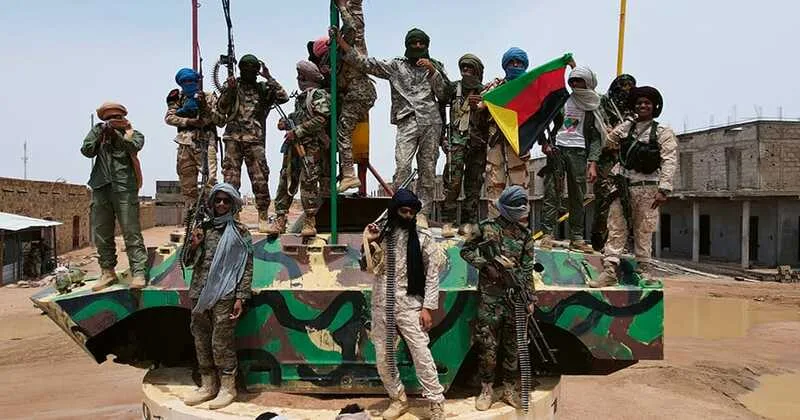
Africa is rapidly emerging as the new epicentre of global jihad, with cells of terrorist organisations such as ISIS, Boko Haram, and Al-Qaeda gaining alarming strength across the continent. Thousands have been killed as insurgencies once limited to deserts and jungles now spread across nations and regions. Extremist groups, including Boko Haram, Al-Shabaab, and Jamaat Nusrat al-Islam wal-Muslimeen (JNIM), are unleashing large-scale violence and terror. It is estimated that around 18,900 people were killed in attacks by such groups last year alone. Without urgent international action, global terrorism risks entering a renewed and deadly phase.
Over the past three years, the annual death toll from terrorist attacks in Africa has been roughly one-third higher than between 2019 and 2021. Victims are often killed in the most brutal ways, by bombing, beheading, stoning, or slashing with swords. Acts of sexual violence, public executions, and forced marriages are used to enforce dominance and control over local populations. Just last week, jihadists in Mali brutally murdered popular TikTok influencer Mariam Cisse, accusing her of aiding the army, a stark reminder of the extremists’ growing reach and cruelty.
Three Fronts of Terror: The Sahel, Somalia, and the lake Chad basin
The jihadist focus in Africa now revolves around three major regions, the Sahel, Somalia, and the Lake Chad Basin. More than half of all recorded killings have occurred in the Sahel, which stretches across Burkina Faso, Mali, and Niger. Al-Qaeda’s key networks in Africa include Al-Shabaab in Somalia and Jamaat Nusrat al-Islam wal-Muslimeen (JNIM) in the Sahel, while ISIS operates through a growing network of provinces spanning West Africa, Mozambique, Somalia, and Libya. In Nigeria, Boko Haram, once a single organisation, has splintered into rival factions, fighting both the state and one another.
Formed in 2017, JNIM, an affiliate of Al-Qaeda, has evolved into West Africa’s most dangerous militant force. It unites several jihadist groups that once operated independently in Mali and its neighbouring states. Today, JNIM commands an estimated 6,000 fighters spread across coastal West African countries such as Mali, Burkina Faso, Niger, Benin, and Togo. Functioning as a vast insurgent network, its stated objectives include expelling foreign troops, overthrowing Sahelian governments, and establishing a regime governed by their extremist interpretation of Islamic law stretching from the Sahara to the Atlantic coast. JNIM frequently ambushes soldiers, seizes control of small towns, and enforces its will through fear and violence.
#KhabarDuniyaKi | Al-Qaeda-linked Jama’at Nusrat al-Islam al-Muslimin ( JNIM) surrounds Mali’s capital Bamako, blocks fuel, and aims to topple the government to impose a pre-modern caliphate on four million residents.
Watch the full program:https://t.co/9S06egbbUi@CS_Joshii… pic.twitter.com/kt8gYkc2cp
— DD News (@DDNewslive) November 5, 2025
The group has shown both opportunism and savagery, at times entering pacts with local communities, and at other times annihilating entire villages that resist. In June 2024, JNIM claimed responsibility for a devastating attack on a military base in Boulkessi, Mali, that left more than 100 soldiers dead. Civilians often bear the brunt of their campaigns. In Burkina Faso alone, over 6,300 people were killed in Islamist violence in 2024, representing nearly three-fifths of the total fatalities across the Sahel that year. Survivors described horrifying scenes of militants moving from house to house, executing men and boys, torching homes, and destroying entire settlements.
Expanding Frontlines: Al-Shabaab, Boko Haram, and the spread of ISIS across Africa
Among Al-Qaeda’s African affiliates, Al-Shabaab remains the largest, wealthiest, and most lethal. Based in Somalia, it has carried out some of the deadliest attacks in the continent’s recent history. In 2017, the group orchestrated a massive truck bombing in Mogadishu that killed over 600 people and injured more than 300. Earlier, in 2013, Al-Shabaab gunmen killed 71 people and injured around 200 in an attack on the Westgate Mall in Nairobi, Kenya. Two years later, in April 2015, the group massacred 150 people at Garissa University College in Kenya. More recently, in 2022, they targeted civilian and diplomatic establishments, including the Hyatt Hotel in Mogadishu, underscoring their continued strength and resilience. While ISIS has a smaller presence in Somalia, composed largely of foreign fighters, it remains a disruptive force.
In Nigeria, Boko Haram continues to spread terror, particularly in the country’s northern regions. The group gained global infamy in 2014 after abducting 276 schoolgirls from Chibok, many of whom were forcibly converted to Islam, enslaved, or subjected to horrific abuse. Boko Haram militants routinely massacre villagers who defy their orders, enforce strict religious codes, and exploit local grievances to recruit followers. The group’s internal divisions have done little to weaken its capacity for violence. Beyond these hotspots, extremist groups have expanded their presence across northern Mozambique, Libya, and Algeria. ISIS-affiliated militants have been responsible for mass killings in the Democratic Republic of Congo and Uganda.
Christian persecution in #Mali
Christianity suffers from cruel persecution in more than half of #Africa’s 54 countries. Mali is among the worst examples of this. (Population of Christians in Mali: 497,000). The organization Open Doors reports:
“The Islamic insurgency that… pic.twitter.com/21zrv7h3LC
— Uzay Bulut (@bulutuzay_) June 18, 2024
Analysts point to poverty, external interference, unemployment, and widespread disillusionment with corrupt and ineffective governments as major drivers of recruitment into jihadist ranks. Across the continent, state weakness and the absence of effective governance have created fertile ground for radicalisation. If left unchecked, Africa’s jihadist insurgencies threaten to destabilise entire regions and export violence far beyond the continent’s borders. The international community must act swiftly and decisively to counter this growing menace before Africa becomes the permanent epicentre of global terror once again.














Comments