





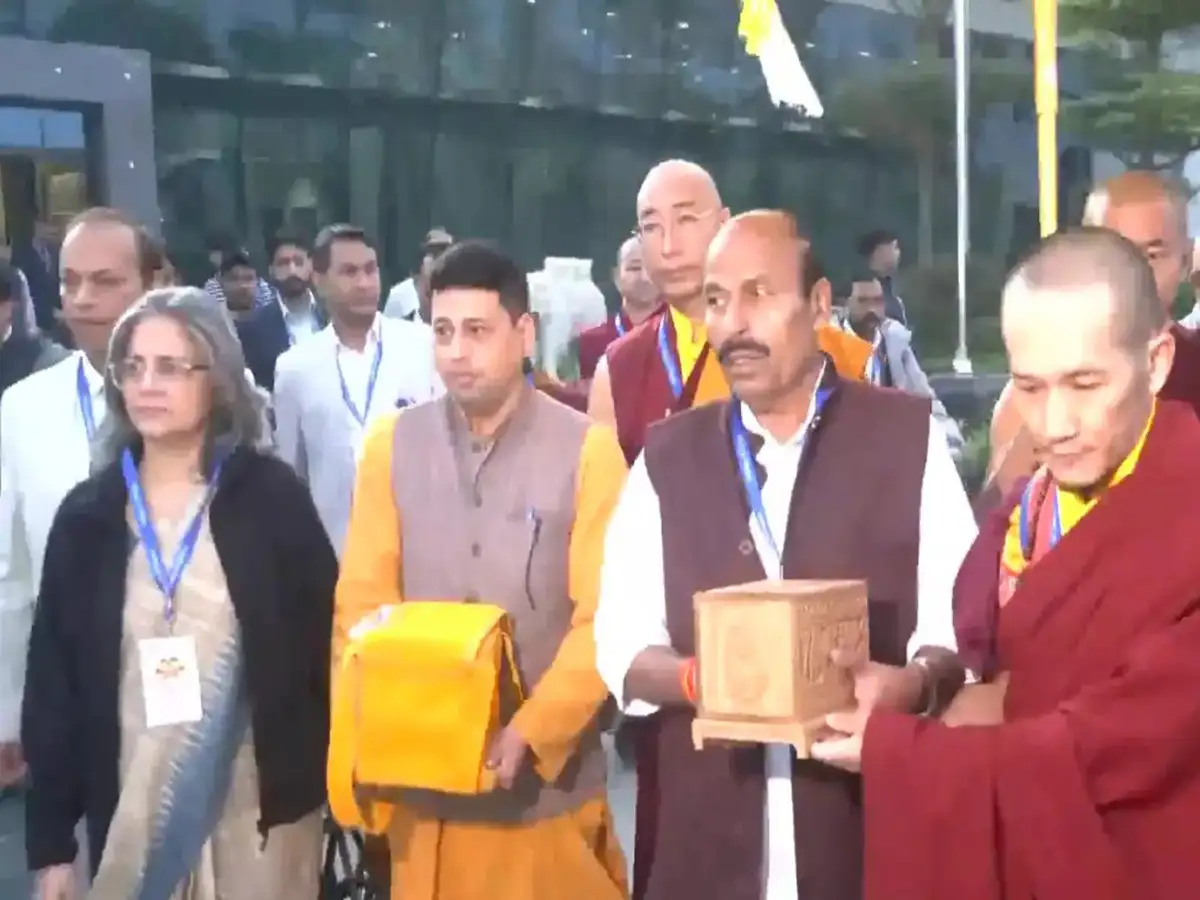
The sacred relics of Buddha, preserved at India’s National Museum in New Delhi, have embarked on a spiritually significant journey to Bhutan, marking yet another milestone in the deep-rooted cultural and spiritual ties between the two Himalayan neighbours. The relics are being displayed in Bhutan from November 8 to 18 as part of the Global Peace Prayer Festival (GPPF) in Thimphu.
The event coincides with the 70th birth anniversary of Bhutan’s fourth king, Jigme Singye Wangchuk, a monarch celebrated for introducing the concept of Gross National Happiness (GNH), a philosophy that blends material development with spiritual well-being.
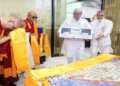
A high-level delegation led by Dr. Virendra Kumar, Union Minister for Social Justice and Empowerment, is accompanying the relics. The delegation also includes senior Buddhist monks, scholars, and officials from India’s Ministry of Culture and the International Buddhist Confederation (IBC).
This marks the second time the relics have travelled to Bhutan. The first occasion was in 2011, when the sacred artefacts were brought to the kingdom to commemorate the royal wedding of King Jigme Khesar Namgyel Wangchuck and Queen Jetsun Pema.
Dr. Virendra Kumar, before departing for Bhutan, described the event as “a moment of great spiritual importance and a testimony to India’s living Buddhist heritage.” He said the exposition not only celebrates Lord Buddha’s timeless message of peace and compassion but also reinforces “India’s cultural and spiritual bond with Bhutan and the broader Buddhist world.”
The sacred relics will be displayed at the Kuenrey Hall of Tashichho Dzong, one of Bhutan’s most revered monastic and administrative centres, located in the heart of Thimphu. The grand hall will host thousands of devotees, monks, and international visitors expected to pay homage during the ten-day exposition.
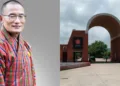
Bhutan’s Prime Minister Tshering Tobgay, while inaugurating the festival, expressed heartfelt gratitude to the Government of India and Prime Minister Narendra Modi for facilitating the visit of the relics. “This event reaffirms the sacred spiritual connection between our two nations. The relics bring with them not just a part of Buddha’s physical legacy but also his eternal message of peace and enlightenment,” he said.
The exposition is being organised jointly by India’s Ministry of Culture and the International Buddhist Confederation (IBC), with the active support of Bhutan’s Ministry of Home and Cultural Affairs and the Central Monastic Body.
According to officials, the exhibition will include multiple sessions on Guru Padmasambhava’s life, Buddha’s teachings, and the archaeological discovery of the relics, offering visitors deeper insights into the spiritual lineage connecting India and Bhutan.
In addition to the relics, the National Museum of India will also showcase select sculptures from its Buddhist Art and Heritage Gallery, highlighting the artistic excellence of India’s ancient Buddhist sites such as Sarnath, Amaravati, and Nalanda.
Shared Heritage and India’s Buddhist Diplomacy
Buddhism forms the bedrock of Bhutan’s identity, shaping its temples, monasteries, and even its governance model. From the majestic monasteries of Paro Taktsang to the serene dzongs that dot the countryside, the Buddhist spirit permeates every aspect of Bhutanese life.
India and Bhutan share a centuries-old bond rooted in Buddhist philosophy and spiritual exchange. The visit of Buddha’s relics is seen as a continuation of India’s “Buddhist diplomacy,” an initiative to foster cultural ties and promote global peace through the teachings of the Buddha.
In recent years, India has organised similar exhibitions of Buddha relics in Mongolia (2022), Thailand (2023), Vietnam (2024), and Russia’s Kalmykia region, all of which drew immense public devotion and international acclaim. These expositions aim to project India as the land of Buddha’s enlightenment and legacy, while strengthening its soft power diplomacy across Asia.
For Bhutan, the arrival of the relics is a moment of profound national reverence. The Global Peace Prayer Festival, conceived by the fourth king, serves as a platform for global spiritual unity and collective meditation for peace.
Buddhist scholars note that the event symbolises not just an act of religious devotion but a reaffirmation of Bhutan’s national philosophy. The principles of compassion, mindfulness, and balance, central to Buddhism, are deeply woven into the country’s development model of Gross National Happiness.
The ten-day event in Thimphu is expected to draw monks, nuns, and peace advocates from several countries, including Nepal, Sri Lanka, Japan, and Myanmar. Meditation sessions, chanting ceremonies, and cultural performances celebrating Buddha’s life and message will accompany the relic exposition.
Indian and Bhutanese officials emphasised that the event seeks to inspire humanity toward a more peaceful and sustainable world, echoing the Buddha’s message of non-violence, compassion, and harmony.
A testament to timeless bonds
The journey of Buddha’s relics from New Delhi to Thimphu is not just a ceremonial act, it is a reaffirmation of the timeless spiritual and cultural bond between India and Bhutan.
By sharing these sacred relics, India continues to extend its message of peace, unity, and spiritual fraternity across borders. As both nations join hands in reverence, the Global Peace Prayer Festival stands as a beacon of hope, reminding the world that the light of Buddha’s wisdom still shines bright across the Himalayas.






Comments