The untold story of Veer Savarkar
December 7, 2025
  • Read Ecopy
  • Circulation
  • Advertise
  • Careers
  • About Us
  • Contact Us
Android AppiPhone AppArattai
Organiser
  • ‌
  • Bharat
    • Assam
    • Bihar
    • Chhattisgarh
    • Jharkhand
    • Maharashtra
    • View All States
  • World
    • Asia
    • Europe
    • North America
    • South America
    • Africa
    • Australia
  • Editorial
  • International
  • Opinion
  • RSS @ 100
  • More
    • Op Sindoor
    • Analysis
    • Sports
    • Defence
    • Politics
    • Business
    • Economy
    • Culture
    • Special Report
    • Sci & Tech
    • Entertainment
    • G20
    • Azadi Ka Amrit Mahotsav
    • Vocal4Local
    • Web Stories
    • Education
    • Employment
    • Books
    • Interviews
    • Travel
    • Law
    • Health
    • Obituary
  • Subscribe
    • Subscribe Print Edition
    • Subscribe Ecopy
    • Read Ecopy
  • ‌
  • Bharat
    • Assam
    • Bihar
    • Chhattisgarh
    • Jharkhand
    • Maharashtra
    • View All States
  • World
    • Asia
    • Europe
    • North America
    • South America
    • Africa
    • Australia
  • Editorial
  • International
  • Opinion
  • RSS @ 100
  • More
    • Op Sindoor
    • Analysis
    • Sports
    • Defence
    • Politics
    • Business
    • Economy
    • Culture
    • Special Report
    • Sci & Tech
    • Entertainment
    • G20
    • Azadi Ka Amrit Mahotsav
    • Vocal4Local
    • Web Stories
    • Education
    • Employment
    • Books
    • Interviews
    • Travel
    • Law
    • Health
    • Obituary
  • Subscribe
    • Subscribe Print Edition
    • Subscribe Ecopy
    • Read Ecopy
Organiser
  • Home
  • Bharat
  • World
  • Operation Sindoor
  • Editorial
  • Analysis
  • Opinion
  • Culture
  • Defence
  • International Edition
  • RSS @ 100
  • Magazine
  • Read Ecopy
Home Bharat

The untold story of Veer Savarkar

WEBDESKWEBDESK
Feb 26, 2021, 04:45 am IST
in Bharat
Follow on Google News
FacebookTwitterWhatsAppTelegramEmail

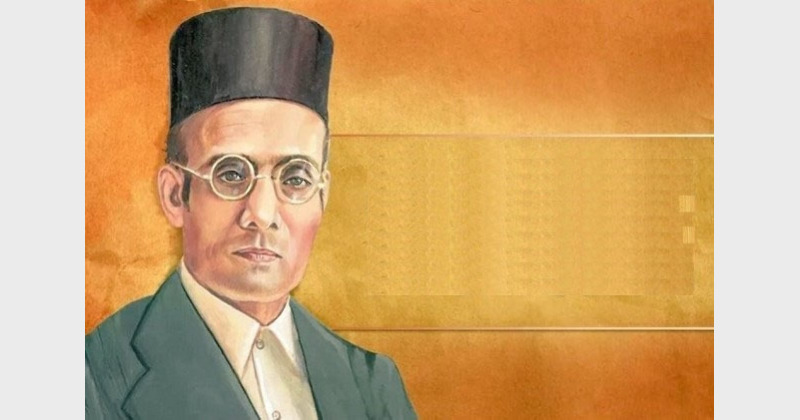
Whenever there’s a discussion on Veer Savarkar’s legacy, the left-wing followers bring up the mercy petition drafted by the pioneer of Hindutva to the British government for pardoning/shortening his sentence. Most Left-Wing supporters fail to realise that Veer Savarkar’s prison wasn’t a hotel styled luxurious “prison” that Nehru was sent to in his mid-political career. Veer Savarkar was a known freedom fighter before the controversial murder trial, which put him under life imprisonment in the cellular prisons or Port Blair. In 1909, Veer Vinayak Savarkar was arrested in Britain to organise armed revolts against the British government for the newly introduced ‘Morley-Minto reforms’, which had called for separate electorates for Muslims to “protect them from Hindu dominance in India”. There was a stark contrast between the prisons of both leaders.
 
The prisons of the Cellular Jail in Port Blair, Kaala Paani were indeed horrifying, to say the least, from cramped prisons with multiple inmates to the torture inflicted by the wardens and prison authorities. Surveillance was intended to be the key foundation at the jail which derived its name from the small, individual cells that housed prisoners. Each of the 693 cells was of 4.5 m x 2.7 m dimensions, with a ventilator at the height of 3 m on the back wall. The front corridor of each wing faced the back wall of its adjacent wing so that prisoners could not communicate in any way at all. Of the three-pronged hunger, torture, and isolation strategy, it was the third that was intended to be the harshest punishment. The inmates such as Veer Savarkar were treated horribly, and food served to them was filled with dust and grass while the water given to them was unpurified rainwater. Inmates were forbidden from interacting with each other and were whipped if found to be chatting. Tedious work was given to the inmates, and they weren’t allowed to sit from sunrise to sunset.
 
Under such circumstances, it was inevitable to give in to the British authorities for some mercy. The walls of the jails echoed with the hair raising screams of the inmates it housed. Savarkar, tired of such conditions, decided to draft a mercy petition to the British so that he could be spared from such treacherous attempts by the British government to punish political prisoners who had called for Swaraj. If we compare these conditions to India’s first prime minister, Jawaharlal Nehru was given a luxurious cell, all to himself with an armchair, desk, rocking chair, and window. Nehru never faced the same cruelty which Savarkar faced. Born with a silver spoon in his mouth, he had family connections with the British authorities and was friends with them; this spared him from the cruellest forms. The conditions faced by the two leaders dramatically differ; it’s not fair to compare their struggles simply because Veer Savarkar had faced a lot more resistance than Nehru ever did.
 
The beauty of Savarkar is that he never hides his letters, petitions, conditions; on the contrary, in his autobiography ‘My Transportation for Life’, he explains frankly and in great details the political strategy behind them all. So, let no one crow that they ‘unearthed’ or researched them from the National Archives’, New Delhi, or Andaman’s Documents and ‘exposed’ them by publishing it! Three years later, on January 6, 1924, Savarkar was released from prison but kept under strict surveillance within the Ratnagiri district’s frontiers and debarred from political activity. He spent the next 13 years of his life this way. But it did not stop him from beginning a series of social reforms in Ratnagiri to break the caste system. Long before the Harijan movement or B.R. Ambedkar’s clarion call, Savarkar championed inter-caste dining and built a Patit Pavan temple in Ratnagiri to all castes.
 
The Department of Art and Culture of the Andaman and Nicobar administration has no record of any mercy petitions by Vinayak Damodar Savarkar to the British government, which is why such pleas are not displayed in the light and sound show at the Cellular Jail in Port Blair, Culture Minister Prahlad Singh Patel told the Rajya Sabha . (The Hindu, February 4 2020).
 
To conclude, “You can wake up a sleeping person, but you can’t wake up a person who pretends to sleep.”

ShareTweetSendShareSend
✮ Subscribe Organiser YouTube Channel. ✮
✮ Join Organiser's WhatsApp channel for Nationalist views beyond the news. ✮
Previous News

Xi Administration Enforces New Rules to Curb Public Unrest on Social Media as Netizens Question PLA Death Numbers in Galwan

Next News

PM Modi launches developmental projects worth Rs 3,023 crores in Puducherry

Related News

UMEED Portal

UMEED Portal deadline ends: Logs 5.17 lakh Waqf properties, with 2.16 lakh approved, 2.13 lakh pending, 10,869 rejected

R. Sreelekha IPS (Retd.)

Kerala: Interview with R. Sreelekha IPS (Retd.) — BJP’s Thiruvananthapuram Municipal Corporation Candidate

How Nehru Torpedoed Vande Mataram: The Untold Story

Bangladeshi army officer and senior BNP leader Col Abdul Haque

A former Bangladeshi army officer & BNP leader urges youth to get army training to sever Northeast from India

PM Narendra Modi on Vande Bharat

“Removal of significant verses in Vande Mataram sowed seeds of partition”: PM Modi

West Bengal: Sanatan Sanskriti Sansad’s Gita Path Sees 6.5 Lakh Hindus Recite the Gita in Kolkata

Load More

Comments

The comments posted here/below/in the given space are not on behalf of Organiser. The person posting the comment will be in sole ownership of its responsibility. According to the central government's IT rules, obscene or offensive statement made against a person, religion, community or nation is a punishable offense, and legal action would be taken against people who indulge in such activities.

Latest News

UMEED Portal

UMEED Portal deadline ends: Logs 5.17 lakh Waqf properties, with 2.16 lakh approved, 2.13 lakh pending, 10,869 rejected

R. Sreelekha IPS (Retd.)

Kerala: Interview with R. Sreelekha IPS (Retd.) — BJP’s Thiruvananthapuram Municipal Corporation Candidate

How Nehru Torpedoed Vande Mataram: The Untold Story

Bangladeshi army officer and senior BNP leader Col Abdul Haque

A former Bangladeshi army officer & BNP leader urges youth to get army training to sever Northeast from India

PM Narendra Modi on Vande Bharat

“Removal of significant verses in Vande Mataram sowed seeds of partition”: PM Modi

West Bengal: Sanatan Sanskriti Sansad’s Gita Path Sees 6.5 Lakh Hindus Recite the Gita in Kolkata

(L) Panakkad Munavarali Shihab Thangal (R) Fathima Nargese

Kerala: Muslim League leader’s 16 years old daughter Fathima Nargese backs women entry into Mosques, father disputes

Pakistani traders protest mounting losses as prolonged border closures disrupt regional commerce and strain ties with Kabul

Taliban strike back as Pakistan border shutdown with Kabul choke trade routes and trigger protest at home

The doctrine of Geeta diplomacy

The Doctrine of Gita Diplomacy: Culture, strategy and the evolving global connect of India

Defence Minister Rajnath Singh speaks post inaugurating the infrastructure projects of BRO in Leh

Defence Minister Rajnath Singh hails the role of BRO in revolutionising communication & connectivity in border regions

Load More
  • Privacy
  • Terms
  • Cookie Policy
  • Refund and Cancellation
  • Delivery and Shipping

© Bharat Prakashan (Delhi) Limited.
Tech-enabled by Ananthapuri Technologies

  • Home
  • Search Organiser
  • Bharat
    • Assam
    • Bihar
    • Chhattisgarh
    • Jharkhand
    • Maharashtra
    • View All States
  • World
    • Asia
    • Africa
    • North America
    • South America
    • Europe
    • Australia
  • Editorial
  • Operation Sindoor
  • Opinion
  • Analysis
  • Defence
  • Culture
  • Sports
  • Business
  • RSS @ 100
  • Entertainment
  • More ..
    • Sci & Tech
    • Vocal4Local
    • Special Report
    • Education
    • Employment
    • Books
    • Interviews
    • Travel
    • Health
    • Politics
    • Law
    • Economy
    • Obituary
  • Subscribe Magazine
  • Read Ecopy
  • Advertise
  • Circulation
  • Careers
  • About Us
  • Contact Us
  • Policies & Terms
    • Privacy Policy
    • Cookie Policy
    • Refund and Cancellation
    • Terms of Use

© Bharat Prakashan (Delhi) Limited.
Tech-enabled by Ananthapuri Technologies