#BuddhaPurnima : The Indic Buddha
December 7, 2025
  • Read Ecopy
  • Circulation
  • Advertise
  • Careers
  • About Us
  • Contact Us
Android AppiPhone AppArattai
Organiser
  • ‌
  • Bharat
    • Assam
    • Bihar
    • Chhattisgarh
    • Jharkhand
    • Maharashtra
    • View All States
  • World
    • Asia
    • Europe
    • North America
    • South America
    • Africa
    • Australia
  • Editorial
  • International
  • Opinion
  • RSS @ 100
  • More
    • Op Sindoor
    • Analysis
    • Sports
    • Defence
    • Politics
    • Business
    • Economy
    • Culture
    • Special Report
    • Sci & Tech
    • Entertainment
    • G20
    • Azadi Ka Amrit Mahotsav
    • Vocal4Local
    • Web Stories
    • Education
    • Employment
    • Books
    • Interviews
    • Travel
    • Law
    • Health
    • Obituary
  • Subscribe
    • Subscribe Print Edition
    • Subscribe Ecopy
    • Read Ecopy
  • ‌
  • Bharat
    • Assam
    • Bihar
    • Chhattisgarh
    • Jharkhand
    • Maharashtra
    • View All States
  • World
    • Asia
    • Europe
    • North America
    • South America
    • Africa
    • Australia
  • Editorial
  • International
  • Opinion
  • RSS @ 100
  • More
    • Op Sindoor
    • Analysis
    • Sports
    • Defence
    • Politics
    • Business
    • Economy
    • Culture
    • Special Report
    • Sci & Tech
    • Entertainment
    • G20
    • Azadi Ka Amrit Mahotsav
    • Vocal4Local
    • Web Stories
    • Education
    • Employment
    • Books
    • Interviews
    • Travel
    • Law
    • Health
    • Obituary
  • Subscribe
    • Subscribe Print Edition
    • Subscribe Ecopy
    • Read Ecopy
Organiser
  • Home
  • Bharat
  • World
  • Operation Sindoor
  • Editorial
  • Analysis
  • Opinion
  • Culture
  • Defence
  • International Edition
  • RSS @ 100
  • Magazine
  • Read Ecopy
Home Bharat

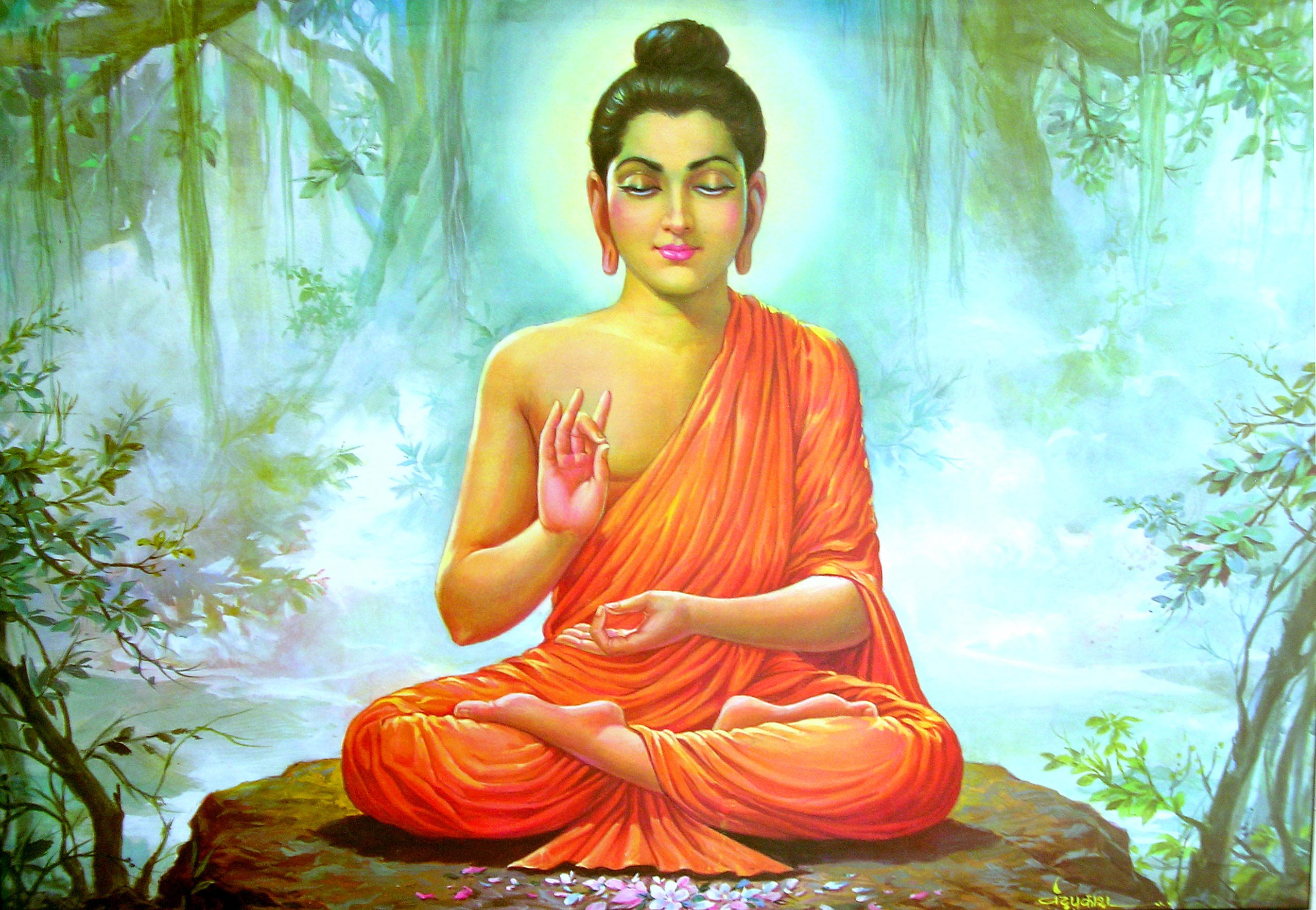
#BuddhaPurnima : The Indic Buddha

Buddha was born into Sanatan Dharma milieu. He was educated in the philosophies of Vedas and Upanishads and taught the laws laid down in Sastras. He absorbed the values of the society he grew up in

Archive ManagerArchive Manager
May 7, 2020, 06:30 am IST
in Bharat
Follow on Google News
FacebookTwitterWhatsAppTelegramEmail
g_1  H x W: 0 x
Papia Mitra
Buddha Purnima is a time of celebration and introspection not by just Buddhists, but also by all followers of Indic way of living. Buddhadeva, as any Wikipedia will tell you, is the founder of a new creed called Buddhism, which is spread all over the world. Yet, simultaneously, he is also an avatar of Vishnu among Hindus and honoured with appropriate devotion. Nor do the Buddhists object to this. Thus he is something more than the founder of just one single religion. Yet this dual status surprises no one except those who are monotheists unable to look beyond a simple binary of God and the Devil. The Sakyamuni’s teachings were a break from then prevalent tradition, and a new way of living, but not so radical that all continuity with the past is lost and no links remained with traditional culture. Buddha himself understood this and that is why he did not create a new term for his new creed. That is why he called it ‘dhamma‘, that is, dharma, as the common people of his day pronounced it.
Buddhism then is Dharma as we understand it. Academicians of religion argue that it is something different from Hinduism. As proof, they point out conflicts among Buddhists and Hindus in history and differences in doctrines. But looking at it through the western lens they mistake the matter. The conflicts or arguments were more on basis of philosophical points among the scholars, and — human nature being what it is — sometimes over royal patronages and gifts to stupas and mandirs. Even among the elite, we find noblemen and royal families patronising both. No historical evidence tells us of ordinary people rioting among themselves, or either faith systems being forcibly imposed on the people. On the contrary, the followers of the new learning and the old among the masses lived as a culturally integrated people, distinguished certainly in some practices and ways of worship, but no more than the Saivaite is different from the Sakta. The reason is that dharma is the overarching principle that upholds the universe and guides human beings as social creatures. That is why Hindus call it Sanatan Dharma, the binding and guiding structure that has always existed.
Buddha was born into Sanatan Dharma milieu. He was educated in the philosophies of Vedas and Upanishads and taught the laws laid down in Sastras. He absorbed the values of the society he grew up in. ( I am not using the word ‘Hindu’ because that at that time the word would be more a geographical marker than a name for a particular community). It is not surprising therefore that when he revolted against established norms, he would not set his face against dharma; instead what he propagated was a much-needed reformation and showed the people yet another way of interpreting the world and how to live in it. He left his family and a world of power and wealth behind to seek enlightenment, exactly as the rishis had done in the past and will do again. It is also significant that he was not put to death; nor did he have to establish his dhamma by warfare. Instead, he was accepted as a great teacher and finally found his place among the Avatar pantheon. Just as Vishnu embodied himself as Ramachandra to teach what it means to be Maryada Purushottam, so too Buddha was incarnated to focus on compassion/ Karuna. But this is not one-sided. All Hindu gods find their place in the Buddhist heavens. According to The Lankavatara Sutra, chapter 12 Buddha had declared that people worship him differently — as Bramha, Vishnu, Rama, Indra, Varuna and according to tale no 461 of The Jatakas, Buddha stated that in previous birth he himself was Rama. If Buddha and Rama are incarnations of each other, then there can be no conflict among their worshippers and in reality there is not. Indic traditions cannot be sharply separated from each other nor regarded as a kind of class conflict.
The larger point of peaceful co-existence, becomes stronger when we look at the countries where Buddhism is the majority religion or substantial population follow Buddhism. Yet there is no conflict with religions native to them, even if those countries are far distant. For example, China’s indigenous philosophy of Taoism and the Chinese folk gods, Japanese Shinto religion with its rich mythology, as old as Japanese culture itself has blended harmoniously with Buddhism, So too in Cambodia, Thailand, Myanmar, Mongolia, Vietnam, Java, Indonesia, Malaysia. This is because the native ways of living and worshipping – before the coming of Semitic religions — were inclusivist and more in tune with Sanatan Dharma. Interesting also to note that where Buddha went, so too went Rama! All over Asia, Ramayana is retold and performed in varying forms, the story of Rama providing a unifying connection of cultures. In fact, the national epic of Thailand is Ramakien and the king’s official title is Rama because Rama is the ideal king. Thus even in lands far away from India, another version of Sanatan Dharma flourishes intertwined with Rama the avatar and hero.
We complete the circle and return to the original point. Buddha is not someone divorced from Sanatan Sanskriti, nor Buddhism an isolated phenomenon that suddenly sprang up in India and travelled out like commodity export. Au contraire, Buddhism and so-called Hinduism are simply two aspects of the same way of living and practising self-realisation.
ShareTweetSendShareSend
✮ Subscribe Organiser YouTube Channel. ✮
✮ Join Organiser's WhatsApp channel for Nationalist views beyond the news. ✮
Previous News

RSS Sah Sarkaryavah Dattatreya Hosabale interacts with Foreign Media through video conference; Highlights selfless and equitable seva of RSS Swayamsevaks across the country during lockdown

Next News

IIT Delhi start-up launches ?Reusable Antimicrobial Mask?

Related News

West Bengal: Sanatan Sanskriti Sansad’s Gita Path Sees 6.5 Lakh Hindus Recite the Gita in Kolkata

(L) Panakkad Munavarali Shihab Thangal (R) Fathima Nargese

Kerala: Muslim League leader’s 16 years old daughter Fathima Nargese backs women entry into Mosques, father disputes

Pakistani traders protest mounting losses as prolonged border closures disrupt regional commerce and strain ties with Kabul

Taliban strike back as Pakistan border shutdown with Kabul choke trade routes and trigger protest at home

The doctrine of Geeta diplomacy

The Doctrine of Gita Diplomacy: Culture, strategy and the evolving global connect of India

Defence Minister Rajnath Singh speaks post inaugurating the infrastructure projects of BRO in Leh

Defence Minister Rajnath Singh hails the role of BRO in revolutionising communication & connectivity in border regions

Dismantling the threat of white-collar terrorism

The white terror module and the need for de-radicalisation of campuses

Load More

Comments

The comments posted here/below/in the given space are not on behalf of Organiser. The person posting the comment will be in sole ownership of its responsibility. According to the central government's IT rules, obscene or offensive statement made against a person, religion, community or nation is a punishable offense, and legal action would be taken against people who indulge in such activities.

Latest News

West Bengal: Sanatan Sanskriti Sansad’s Gita Path Sees 6.5 Lakh Hindus Recite the Gita in Kolkata

(L) Panakkad Munavarali Shihab Thangal (R) Fathima Nargese

Kerala: Muslim League leader’s 16 years old daughter Fathima Nargese backs women entry into Mosques, father disputes

Pakistani traders protest mounting losses as prolonged border closures disrupt regional commerce and strain ties with Kabul

Taliban strike back as Pakistan border shutdown with Kabul choke trade routes and trigger protest at home

The doctrine of Geeta diplomacy

The Doctrine of Gita Diplomacy: Culture, strategy and the evolving global connect of India

Defence Minister Rajnath Singh speaks post inaugurating the infrastructure projects of BRO in Leh

Defence Minister Rajnath Singh hails the role of BRO in revolutionising communication & connectivity in border regions

Dismantling the threat of white-collar terrorism

The white terror module and the need for de-radicalisation of campuses

Lok Sabha to hold special discussion on 150 years of Vande Mataram

150 years of Vande Mataram: Winter session of Lok Sabha to hold special discussion on Dec. 8; PM Modi to address

India is marching towards Atmanirbharta in defence

Atmanirbharta in Defence: India’s defence manufacturing takes off

Defence Minister Rajnath Singh extends greetings on the occasion of Armed Forces Flag Day

Defence Minister Rajnath Singh extends greetings on Armed Forces Flag Day; Urges people to donate to AFFD Fund

Representative Image

SIR for protecting the health of democracy

Load More
  • Privacy
  • Terms
  • Cookie Policy
  • Refund and Cancellation
  • Delivery and Shipping

© Bharat Prakashan (Delhi) Limited.
Tech-enabled by Ananthapuri Technologies

  • Home
  • Search Organiser
  • Bharat
    • Assam
    • Bihar
    • Chhattisgarh
    • Jharkhand
    • Maharashtra
    • View All States
  • World
    • Asia
    • Africa
    • North America
    • South America
    • Europe
    • Australia
  • Editorial
  • Operation Sindoor
  • Opinion
  • Analysis
  • Defence
  • Culture
  • Sports
  • Business
  • RSS @ 100
  • Entertainment
  • More ..
    • Sci & Tech
    • Vocal4Local
    • Special Report
    • Education
    • Employment
    • Books
    • Interviews
    • Travel
    • Health
    • Politics
    • Law
    • Economy
    • Obituary
  • Subscribe Magazine
  • Read Ecopy
  • Advertise
  • Circulation
  • Careers
  • About Us
  • Contact Us
  • Policies & Terms
    • Privacy Policy
    • Cookie Policy
    • Refund and Cancellation
    • Terms of Use

© Bharat Prakashan (Delhi) Limited.
Tech-enabled by Ananthapuri Technologies