Analysis: UPSC?CSAT Imbroglio ?
December 9, 2025
  • Read Ecopy
  • Circulation
  • Advertise
  • Careers
  • About Us
  • Contact Us
Android AppiPhone AppArattai
Organiser
  • ‌
  • Bharat
    • Assam
    • Bihar
    • Chhattisgarh
    • Jharkhand
    • Maharashtra
    • View All States
  • World
    • Asia
    • Europe
    • North America
    • South America
    • Africa
    • Australia
  • Editorial
  • International
  • Opinion
  • RSS @ 100
  • More
    • Op Sindoor
    • Analysis
    • Sports
    • Defence
    • Politics
    • Business
    • Economy
    • Culture
    • Special Report
    • Sci & Tech
    • Entertainment
    • G20
    • Azadi Ka Amrit Mahotsav
    • Vocal4Local
    • Web Stories
    • Education
    • Employment
    • Books
    • Interviews
    • Travel
    • Law
    • Health
    • Obituary
  • Subscribe
    • Subscribe Print Edition
    • Subscribe Ecopy
    • Read Ecopy
  • ‌
  • Bharat
    • Assam
    • Bihar
    • Chhattisgarh
    • Jharkhand
    • Maharashtra
    • View All States
  • World
    • Asia
    • Europe
    • North America
    • South America
    • Africa
    • Australia
  • Editorial
  • International
  • Opinion
  • RSS @ 100
  • More
    • Op Sindoor
    • Analysis
    • Sports
    • Defence
    • Politics
    • Business
    • Economy
    • Culture
    • Special Report
    • Sci & Tech
    • Entertainment
    • G20
    • Azadi Ka Amrit Mahotsav
    • Vocal4Local
    • Web Stories
    • Education
    • Employment
    • Books
    • Interviews
    • Travel
    • Law
    • Health
    • Obituary
  • Subscribe
    • Subscribe Print Edition
    • Subscribe Ecopy
    • Read Ecopy
Organiser
  • Home
  • Bharat
  • World
  • Operation Sindoor
  • Editorial
  • Analysis
  • Opinion
  • Culture
  • Defence
  • International Edition
  • RSS @ 100
  • Magazine
  • Read Ecopy
Home Bharat

Analysis: UPSC?CSAT Imbroglio ?

The ongoing conflict over the pattern of Union Public Service Examination (UPSC) has much to

Archive ManagerArchive Manager
Aug 11, 2014, 03:38 pm IST
in Bharat
Follow on Google News
FacebookTwitterWhatsAppTelegramEmail

UPSC–CSAT Imbroglio ?

Intro: Civil services aspirants have been demanding the scrapping of the Civil Service Aptitude Test (CSAT) for favouring English medium candidates .?

The ongoing conflict over the pattern of Union Public Service Examination (UPSC) has much to do with the discreet style of functioning to which the examination board has stuck for long, since its establishment as a constitutional body, as envisaged under Article 315 of Indian Constitution. If we look back in history, civil service (earlier called Indian Covenanted Service ICS) was a colonial instrument created by British as a “safety valve” to rule India, which after Independence got rechristened to serve the nation at large. For this purpose, UPSC was established as a constitutional body to conduct and recruit best of the available minds across India with full transparency, integrity to provide equality of opportunity.

ENGLISH OUT!

Candidates, who appeared in Civil Services Examination 2011, may be given one more attempt in 2015.
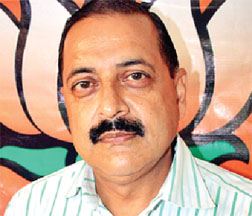
—Jitendra Singh, MoS (Personnel)?

English marks should not count for gradation: Govt
In a major development to end the row over language bias in the UPSC’s preliminary examinations, the government on August 4, 2014 clarified that “marks of English language skills should not be included in merit”. The decision has come as a major relief for hundreds of civil services aspirants protesting against a controversial aptitude test in the preliminary examinations.
Civil services aspirants have been protesting on the streets of Delhi, demanding that the Civil Services Aptitude Test (CSAT) should be scrapped as it leaves Hindi and regional language aspirants at a disadvantage.
Jitendra Singh, Minister of State, Ministry of Personnel said, “Government is of the opinion that in the Civil Services Preliminary examination, Paper II, the marks of the question-section on “English language comprehension skills” should not be included for gradation or merit.” And he added that “candidates, who appeared in Civil Services Examination 2011, may be given one more attempt in 2015.”
The preliminary examination is divided into two sections – General Studies and CSAT
and both the papers are of 200 marks. The General Studies section has 100 questions and the CSAT has 80 questions. But the marks required to qualify General Studies is 30 whereas for CSAT it is 70.
The CSAT comprises of questions based on communication skill, logical reasoning and analytical ability, decision making and problem solving, general mental ability, basic numeracy, data interpretation and English comprehension.
Another issue of concern has been of English to Hindi translation of the paper. Ironically the English questions are translated in Hindi through Google translator which gives the literal meaning of the word and acts as a road block to qualify the exam especially for the students from the Hindi back ground.
Even the Arvind Verma committee has recommended that the quality of English to Hindi translation in CSAT paper should be improved. ?

The first major change in the pattern of examination was done on the recommendation of Kothari Commission in 1969. It was based on the dictum that “average quality will get richer as the streams proceeds from one stage to another”. It basically argued for a three tier selection process based on which an objective question based preliminary test was introduced to unburden candidates appearing at large. The basic purpose was to allow more serious candidates to write main examination and to allow for a competent selection.
The UPSC language row today is over the nature and objective of the preliminary test which was introduced as a screening exam to filter good students but which in due course ended up becoming the biggest obstacle to get through the civil service exam. And all this is due to changes introduced by the UPSC in subsequent years much to the loss of non-English based candidates. To put it simply, the present format is such that it put students of Hindi background at a disadvantage, and the protesting students have argued that the purpose of screening through the present format holds no relevance, if the best of minds get excluded at the preliminary level.
Why I am saying “best minds excluded” is because analysis of data indicates a clear decline in the marks obtained by those who are recommended for final interview in the past three years after the CSAT pattern was adopted compared to those recommended before CSAT was introduced. The irony is that it has defeated the purpose of preliminary screening exam- instead of filtering non-serious candidate, it is increasing the burden. Since the CSAT pattern draws good chance for urban convent educated students to get through it easily, initially, they find it extremely hard to score in mains which demands immense reading and analytical answer writing ability. This leads to sharp deduction in the marks at mains level and compromises the criteria for being recommended for the interview.
The current pattern of the preliminary exam has its origin in the report of YK Alagh Committee, appointed in 2001, which suggested that optional subject at preliminary level must be replaced with an aptitude test based on basic awareness, problem solving and analytical abilities etc. It also called for changes at mains level reducing the number of optional paper to one from two along with some compulsory papers. It was sought to bring in uniformity in the pattern of examination with more emphasis on the general awareness of the candidate with less scope to get through the selected optional subject based on his or her expertise. However, with the introduction of CSAT in 2011, UPSC has brought in complexities at large.
Firstly, the CSAT paper has been accorded more weightage in terms of marks with each question carrying 2.5 marks compared to 2 marks for each question previous to its introduction in 2011. Secondly, question on comprehension constitute almost half of the question paper and has less scope for “problem solving and analytical abilities” based questions as suggested by YK Alagh Committee report. Thirdly, translation of questions to other languages is done in a highly technical manner which leaves less scope for students from vernacular background.
This problem was earlier highlighted by 2012 Nigavekar Committee report which suggested that CSAT paper favours Urban English medium candidates and ignores aspirations of rural candidates. However, despite all its criticism and complexities UPSC seems to be in no mood to retreat from its autocratic style of functioning in the name of constitutional immunity.
Remember, no one is questioning the ability of UPSC to recruit the best minds for the service of nation but, by failing to provide “equality of opportunity to all” it is definitely violating the basic values of our constitution.
Meanwhile, the government is studying the Verma Committee report that examined the possibilities of changing the pattern of civil services examination among other matters, and is working out an amicable solution for the problem.
The wirter is P.hd Candidate of School of International Studies, Jawaharlal Nehru University             -Abhishek Pratap Singh?

ShareTweetSendShareSend
✮ Subscribe Organiser YouTube Channel. ✮
✮ Join Organiser's WhatsApp channel for Nationalist views beyond the news. ✮
Previous News

Cover Story:Respect Rajbhasha?

Next News

Promote Sanskrit

Related News

Japan issues tsunami warning after back-to-back earthquakes over 6 magnitude hit off Aomori prefecture

Union Health Minister JP Nadda with Norway's Health and Care Services Minister Jan Christian Vestre

“The World has much to learn from India”: Norway eyes closer digital health partnership

The bronze statues at the Saraighat War Memorial Park in Agyathuri, Assam, commemorating the Battle of Saraighat

Decoding North East: The forgotten frontiers

HECI: Transformation through integration

The indigenous cocabulary of RSS reflects the spirit of nationalism and selfless service

Rashtriya Swayamsevak Sangh: Fostering inclusivity, collectivity & nationality with ingenious vocabulary of belonging

The bomb blast site near Red fort, Delhi
(Inset: Suicide bomber Dr Umar Un Nabi)

Anti-Terror Operations: Dismantling the terror web

Load More

Comments

The comments posted here/below/in the given space are not on behalf of Organiser. The person posting the comment will be in sole ownership of its responsibility. According to the central government's IT rules, obscene or offensive statement made against a person, religion, community or nation is a punishable offense, and legal action would be taken against people who indulge in such activities.

Latest News

Japan issues tsunami warning after back-to-back earthquakes over 6 magnitude hit off Aomori prefecture

Union Health Minister JP Nadda with Norway's Health and Care Services Minister Jan Christian Vestre

“The World has much to learn from India”: Norway eyes closer digital health partnership

The bronze statues at the Saraighat War Memorial Park in Agyathuri, Assam, commemorating the Battle of Saraighat

Decoding North East: The forgotten frontiers

HECI: Transformation through integration

The indigenous cocabulary of RSS reflects the spirit of nationalism and selfless service

Rashtriya Swayamsevak Sangh: Fostering inclusivity, collectivity & nationality with ingenious vocabulary of belonging

The bomb blast site near Red fort, Delhi
(Inset: Suicide bomber Dr Umar Un Nabi)

Anti-Terror Operations: Dismantling the terror web

Representative Image

In what manner did Macaulay demonstrate a toxic mentality and an anti-humanitarian attitude?

Tamil Nadu: DMK Saviour of Tamil narrative crumbles as 85,000 PG TET aspirants fail Tamil language test

Vishva Hindu Parishad officials submitting a memorandum to Chief Minister Mohan Charan Majhi.

Odisha: Demand to free Hindu temples from government control gains momentum; VHP submits draft legislation to CM Majhi

Former Minister K.S. Eshwarappa

Karnataka: Eshwarappa blasts Siddaramaiah over Bhagavad Gita remarks, accuses CM of muslim appeasement

Load More
  • Privacy
  • Terms
  • Cookie Policy
  • Refund and Cancellation
  • Delivery and Shipping

© Bharat Prakashan (Delhi) Limited.
Tech-enabled by Ananthapuri Technologies

  • Home
  • Search Organiser
  • Bharat
    • Assam
    • Bihar
    • Chhattisgarh
    • Jharkhand
    • Maharashtra
    • View All States
  • World
    • Asia
    • Africa
    • North America
    • South America
    • Europe
    • Australia
  • Editorial
  • Operation Sindoor
  • Opinion
  • Analysis
  • Defence
  • Culture
  • Sports
  • Business
  • RSS @ 100
  • Entertainment
  • More ..
    • Sci & Tech
    • Vocal4Local
    • Special Report
    • Education
    • Employment
    • Books
    • Interviews
    • Travel
    • Health
    • Politics
    • Law
    • Economy
    • Obituary
  • Subscribe Magazine
  • Read Ecopy
  • Advertise
  • Circulation
  • Careers
  • About Us
  • Contact Us
  • Policies & Terms
    • Privacy Policy
    • Cookie Policy
    • Refund and Cancellation
    • Terms of Use

© Bharat Prakashan (Delhi) Limited.
Tech-enabled by Ananthapuri Technologies