The first Indian scientist to receive the Nobel Prize
December 7, 2025
  • Read Ecopy
  • Circulation
  • Advertise
  • Careers
  • About Us
  • Contact Us
Android AppiPhone AppArattai
Organiser
  • ‌
  • Bharat
    • Assam
    • Bihar
    • Chhattisgarh
    • Jharkhand
    • Maharashtra
    • View All States
  • World
    • Asia
    • Europe
    • North America
    • South America
    • Africa
    • Australia
  • Editorial
  • International
  • Opinion
  • RSS @ 100
  • More
    • Op Sindoor
    • Analysis
    • Sports
    • Defence
    • Politics
    • Business
    • Economy
    • Culture
    • Special Report
    • Sci & Tech
    • Entertainment
    • G20
    • Azadi Ka Amrit Mahotsav
    • Vocal4Local
    • Web Stories
    • Education
    • Employment
    • Books
    • Interviews
    • Travel
    • Law
    • Health
    • Obituary
  • Subscribe
    • Subscribe Print Edition
    • Subscribe Ecopy
    • Read Ecopy
  • ‌
  • Bharat
    • Assam
    • Bihar
    • Chhattisgarh
    • Jharkhand
    • Maharashtra
    • View All States
  • World
    • Asia
    • Europe
    • North America
    • South America
    • Africa
    • Australia
  • Editorial
  • International
  • Opinion
  • RSS @ 100
  • More
    • Op Sindoor
    • Analysis
    • Sports
    • Defence
    • Politics
    • Business
    • Economy
    • Culture
    • Special Report
    • Sci & Tech
    • Entertainment
    • G20
    • Azadi Ka Amrit Mahotsav
    • Vocal4Local
    • Web Stories
    • Education
    • Employment
    • Books
    • Interviews
    • Travel
    • Law
    • Health
    • Obituary
  • Subscribe
    • Subscribe Print Edition
    • Subscribe Ecopy
    • Read Ecopy
Organiser
  • Home
  • Bharat
  • World
  • Operation Sindoor
  • Editorial
  • Analysis
  • Opinion
  • Culture
  • Defence
  • International Edition
  • RSS @ 100
  • Magazine
  • Read Ecopy
Home Bharat

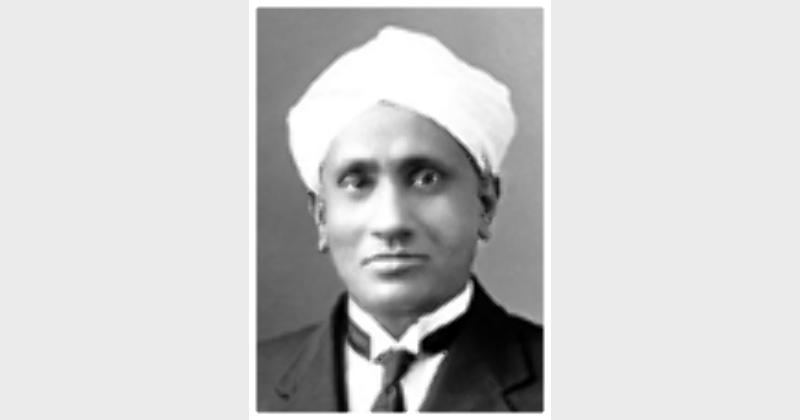
The first Indian scientist to receive the Nobel Prize

CHANDRASEKHARA Venkata Raman was born on November 7, 1888 at Tiruchirappalli, Tamil Nadu. His father, Chandrasekhara Iyer, was a lecturer in physics, in a local college.

Archive ManagerArchive Manager
Nov 24, 2012, 04:29 pm IST
in Bharat
Follow on Google News
FacebookTwitterWhatsAppTelegramEmail

$img_titleCHANDRASEKHARA Venkata Raman was born on November 7, 1888 at Tiruchirappalli, Tamil Nadu. His father, Chandrasekhara Iyer, was a lecturer in physics, in a local college. His mother Parvathi was a housewife. He passed his matriculation when he was twelve years of age. He later joined Presidency College, Madras. He passed his BA and MA examinations with high distinction. He had a deep interest in physics.
While doing his MA, Raman wrote an article on the subject of physics and he sent it to the Philosophical Magazine and Nature, the science magazine of England. On reading this article, many eminent scientists in London noted the talent of this young Indian. Raman wanted to compete for the ICS examination. But to write that examination, one had to go to London. As he was poor and could not afford it, he took the Indian Financial Service examination, conducted in India. He was selected and posted to Rangoon, Burma (now Myanmar), which was then a part of British India.
Later, while working in Calcutta, he associated himself with an Institute called ‘Indian Association for the Cultivation of Science’, which was the only research institution in those days. While working there, his research work came to the notice of the Vice Chancellor of Calcutta University. The Vice Chancellor appointed him as a Professor of Physics in Calcutta University. Sir Raman was in a good position in the financial service. He sacrificed his profession and joined an academic career. When he was working as a Professor he got an invitation from England to attend a science conference. As the ship was sailing through the Mediterranean Sea, Raman got a doubt, as to why the waters of the sea are looking blue. This doubt initiated his research on light. He found out by experiment that the sea looks blue because of the ‘Scattering Effect of the Sunlight’. This discovery is called “The Raman Effect”. A question that was puzzling to so many other scientists was easily solved by him. His pioneering work helped him become a member of Royal Society of London in 1924. He was awarded with a Knighthood by the British Empire in 1929. This discovery also got Sir Raman the Nobel Prize for Physics for the year 1930. He became the first Indian scientist to receive the Nobel Prize.
Raman discovered “The Raman Effect” on February 28, 1928 and this day is observed as the ‘National Science Day’ in India. In 1933, he joined the Indian Institute of Science, Bangalore, as Director. Later he quit the post of Director and continued to work only in the Physics Department. The University of Cambridge offered him a Professor’s job, which Raman declined stating that he is an Indian and wants to serve in his own country. Dr Homi Bhaba and Dr Vikram Sarabhai were students of Raman.
Sir CV Raman breathed his last on November 21, 1970.

ShareTweetSendShareSend
✮ Subscribe Organiser YouTube Channel. ✮
✮ Join Organiser's WhatsApp channel for Nationalist views beyond the news. ✮
Previous News

Pen Drive for Better Computing Experience

Next News

Congress Cash Transfer HoaxWalmartism gone berserk. Congress goes all out to facilitate market for foreign monopoly

Related News

Representative Image

Pakistan slipping into authoritarian rule, warns the lawyers of the country

Representative Image

China-Japan face-off escalates across Indo-Pacific: An emerging threat to the peace & security of the maritime domain

Defence Minister Rajnath Singh(File Photo)

Defence Minister unveils Galwan War Memorial; Hails border connectivity as key to sucess in Operation Sindoor

UMEED Portal

UMEED Portal deadline ends: Logs 5.17 lakh Waqf properties, with 2.16 lakh approved, 2.13 lakh pending, 10,869 rejected

R. Sreelekha IPS (Retd.)

Kerala: Interview with R. Sreelekha IPS (Retd.) — BJP’s Thiruvananthapuram Municipal Corporation Candidate

How Nehru Torpedoed Vande Mataram: The Untold Story

Load More

Comments

The comments posted here/below/in the given space are not on behalf of Organiser. The person posting the comment will be in sole ownership of its responsibility. According to the central government's IT rules, obscene or offensive statement made against a person, religion, community or nation is a punishable offense, and legal action would be taken against people who indulge in such activities.

Latest News

Representative Image

Pakistan slipping into authoritarian rule, warns the lawyers of the country

Representative Image

China-Japan face-off escalates across Indo-Pacific: An emerging threat to the peace & security of the maritime domain

Defence Minister Rajnath Singh(File Photo)

Defence Minister unveils Galwan War Memorial; Hails border connectivity as key to sucess in Operation Sindoor

UMEED Portal

UMEED Portal deadline ends: Logs 5.17 lakh Waqf properties, with 2.16 lakh approved, 2.13 lakh pending, 10,869 rejected

R. Sreelekha IPS (Retd.)

Kerala: Interview with R. Sreelekha IPS (Retd.) — BJP’s Thiruvananthapuram Municipal Corporation Candidate

How Nehru Torpedoed Vande Mataram: The Untold Story

Bangladeshi army officer and senior BNP leader Col Abdul Haque

A former Bangladeshi army officer & BNP leader urges youth to get army training to sever Northeast from India

PM Narendra Modi on Vande Bharat

“Removal of significant verses in Vande Mataram sowed seeds of partition”: PM Modi

West Bengal: Sanatan Sanskriti Sansad’s Gita Path Sees 6.5 Lakh Hindus Recite the Gita in Kolkata

(L) Panakkad Munavarali Shihab Thangal (R) Fathima Nargese

Kerala: Muslim League leader’s 16 years old daughter Fathima Nargese backs women entry into Mosques, father disputes

Load More
  • Privacy
  • Terms
  • Cookie Policy
  • Refund and Cancellation
  • Delivery and Shipping

© Bharat Prakashan (Delhi) Limited.
Tech-enabled by Ananthapuri Technologies

  • Home
  • Search Organiser
  • Bharat
    • Assam
    • Bihar
    • Chhattisgarh
    • Jharkhand
    • Maharashtra
    • View All States
  • World
    • Asia
    • Africa
    • North America
    • South America
    • Europe
    • Australia
  • Editorial
  • Operation Sindoor
  • Opinion
  • Analysis
  • Defence
  • Culture
  • Sports
  • Business
  • RSS @ 100
  • Entertainment
  • More ..
    • Sci & Tech
    • Vocal4Local
    • Special Report
    • Education
    • Employment
    • Books
    • Interviews
    • Travel
    • Health
    • Politics
    • Law
    • Economy
    • Obituary
  • Subscribe Magazine
  • Read Ecopy
  • Advertise
  • Circulation
  • Careers
  • About Us
  • Contact Us
  • Policies & Terms
    • Privacy Policy
    • Cookie Policy
    • Refund and Cancellation
    • Terms of Use

© Bharat Prakashan (Delhi) Limited.
Tech-enabled by Ananthapuri Technologies