





Nidhi Mathur
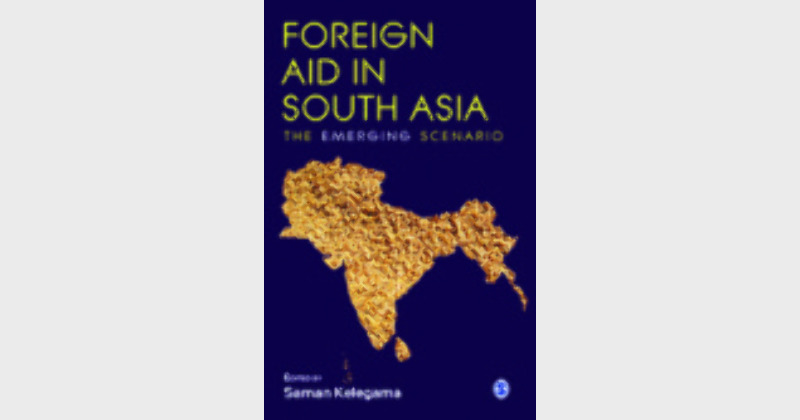
Foreign Aid in South Asia, Saman Kelegama (Ed.), Sage Publications India Pvt Ltd, Pp 336 (HB), Rs 750.00
 The efficacy of foreign aid as a developmental tool over the last few decades in South Asia has been mixed. It has received mixed success in terms of developmental outcomes. This book, which is a compilation of papers by a number of scholars drawn from South Asia and which has been put together by one of Asia’s most distinguished economists, highlights the country/context-specific role of aid, differentiating between countries such as Pakistan and Afghanistan where aid is increasingly linked to security concerns, with those relating to its role in post-conflict economies, such as Sri Lanka and Nepal. These problem-driven dynamics are then compared to the contrasting role of aid in an emerging economy of the size of India and its role in changing from an aid recipient to a donor, and in least developed countries like Bangladesh, Bhutan and Maldives experiencing a transformation in aid receipts.
Beginning with an overview of the aid reform debate, the first paper by Indrajit Coomaraswamy covers the aid system, the emergence of new donors, synthetic issues, principles of aid effectiveness and moving beyond aid dependence.
The second paper shows that in recent times, South-South Cooperation (SSC) between developing countries has become a growing dynamic phenomenon in aid flows as opposed to the customary pattern of aid from the developed to developing countries. Such South-South aid flows are gradually changing the direction of aid flows and providing a platform to face the new global changes. It also presents the benefits and drawbacks of such cooperation. An exhilarating aspect of this paper is that while emphasising the need for trilateral cooperation between donors from advanced and emerging economies, India is and will continue to shift from a recipient of aid to a donor.
The next paper focuses on the impact of aid on growth in India through a new approach in aid-effectiveness regarding the composition of foreign aid. It also suggests that the composition of aid (that is, in cash or kind) matters for deriving the maximum benefits, especially in the case of India.
The paper by V Ahmed and MA Wahab focuses on the nexus between aid and security in Pakistan, which, as a frontier nation against violent terrorism, remains one of the highest recipients of foreign aid. Aid flows in Pakistan show fluctuations which make foreign financing an unreliable option for sustainable growth. Terrorism has led to massive economic loss and insecurity, claim the authors of the paper.
The subsequent paper is based on the nexus between aid and security in the case of Afghanistan. With the country’s shaky security environment and low levels of domestic revenue, foreign aid plays a pivotal role in future developmental plans and in sustaining economic growth. In fact, the country’s development expenditure is entirely funded by aid received largely from the US. This paper reveals that with 90 per cent of world’s opium production in Afghanistan, corruption, terrorism and lack of development are fuelled excessively. Better communication channels between the government and the rural communities for improving policy impact and reduction of regional disparities are called for.
The next paper is based on policy priorities for foreign aid in Sri Lanka, since the country has persistently recorded budget deficits and aid has become vital to the island for financing large-scale infrastructural projects as also social ones. The post-war situation has seen a substantial spike in foreign inflows due to the remittances and emergency relief measures. While addressing the post-Tamil-Sinhalese conflict concerns, the paper identifies the contemporary role of aid in Sri Lanka.
The next paper attempts to recommend policy changes in both the recipient and donor countries for making aid programmes effective in Nepal. It suggests revision of this country’s foreign aid policy after the country was declared a federal republic.
The ninth paper discusses policy priorities for foreign aid reform in Bangladesh. It shows that with gradual decline in aid dependence, the country has now evolved from an aid to trade-dependent economy.
The tenth paper discusses the role of foreign aid to Bhutan where one-fourth of the population lives below the national poverty line. It calls for foreign assistance in poverty alleviation and development.
The last paper is on the role of aid in Maldives and how aid has helped the country in making commendable headway in socio-economic development. With tourism being its backbone, Maldives is fast becoming a world-renowned tourist destination that is leading to its rapid economic growth.
The overall message of the contributors is that individual South Asian countries have to get their act together for the best use of aid.
(Sage Publications India Pvt Ltd, B I/1, Mohan Cooperative Industrial Area, Mathura Road, Post Bag 7, New Delhi-110044; www.sagepublications.com)
A paradigm shift in democratic governance
Nidhi Mathur
Not for Profit: Why Democracy Needs the Humanities, Martha C Nussbaum, Princeton University Press, Pp 169, $15.95
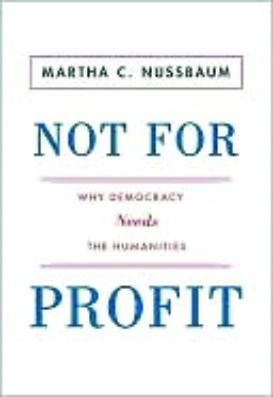 Celebrated philosopher Martha Nussbaum foresees a crisis that is likely to be far more damaging to the future of democratic self-government – a worldwide crisis in education. She says that radical changes are occurring in what democratic societies teach the young and these have not been thought through. Thirsty for national profit, nations and their systems of education are heedlessly discarding skills that are needed to keep democracies alive. If the current trend continues, “nations all over the world will soon be producing generations of useful machines rather than complete citizens who can think for themselves, criticise tradition and understand the significance of another person’s suffering and achievement,” warns the author. She is convinced that the future of the world’s democracies hangs in the balance.
What are these radical changes? Martha says that the humanities and the arts are being cut away in both primary/secondary and college/university education in virtually every nation in the world. She points out that what might be called the humanistic aspects of science and social science – “the imaginative, creative aspects and the aspect of rigorous critical thought are also losing ground as nations prefer to pursue short-term profit by the cultivation of useful and highly applied skills suited to profit-making.”
Literature and philosophy have changed the world, but parents all over the world are more likely “to fret if their children are financially illiterate than if their training in the humanities is deficient.” Nussbaum alerts us to a “silent crisis” in which nations “discard skills” as they “thirst for national profits”. As the arts and humanities are everywhere downsized, there is a serious erosion of the very qualities that are essential to democracy itself.
(Princeton University Press, 41 William Street, Princeton, New Jersey – 08540; press.princeton.edu)









Comments