IN FOCUS
December 7, 2025
  • Read Ecopy
  • Circulation
  • Advertise
  • Careers
  • About Us
  • Contact Us
Android AppiPhone AppArattai
Organiser
  • ‌
  • Bharat
    • Assam
    • Bihar
    • Chhattisgarh
    • Jharkhand
    • Maharashtra
    • View All States
  • World
    • Asia
    • Europe
    • North America
    • South America
    • Africa
    • Australia
  • Editorial
  • International
  • Opinion
  • RSS @ 100
  • More
    • Op Sindoor
    • Analysis
    • Sports
    • Defence
    • Politics
    • Business
    • Economy
    • Culture
    • Special Report
    • Sci & Tech
    • Entertainment
    • G20
    • Azadi Ka Amrit Mahotsav
    • Vocal4Local
    • Web Stories
    • Education
    • Employment
    • Books
    • Interviews
    • Travel
    • Law
    • Health
    • Obituary
  • Subscribe
    • Subscribe Print Edition
    • Subscribe Ecopy
    • Read Ecopy
  • ‌
  • Bharat
    • Assam
    • Bihar
    • Chhattisgarh
    • Jharkhand
    • Maharashtra
    • View All States
  • World
    • Asia
    • Europe
    • North America
    • South America
    • Africa
    • Australia
  • Editorial
  • International
  • Opinion
  • RSS @ 100
  • More
    • Op Sindoor
    • Analysis
    • Sports
    • Defence
    • Politics
    • Business
    • Economy
    • Culture
    • Special Report
    • Sci & Tech
    • Entertainment
    • G20
    • Azadi Ka Amrit Mahotsav
    • Vocal4Local
    • Web Stories
    • Education
    • Employment
    • Books
    • Interviews
    • Travel
    • Law
    • Health
    • Obituary
  • Subscribe
    • Subscribe Print Edition
    • Subscribe Ecopy
    • Read Ecopy
Organiser
  • Home
  • Bharat
  • World
  • Operation Sindoor
  • Editorial
  • Analysis
  • Opinion
  • Culture
  • Defence
  • International Edition
  • RSS @ 100
  • Magazine
  • Read Ecopy
Home Bharat

IN FOCUS

The Chief Minister of Jammu & Kashmir, Omar Abdullah has recently suggested that the provisions of the Armed Forces (Special Powers) Act, 1958 could be made inapplicable to some parts of the State of Jammu & Kashmir.

Archive ManagerArchive Manager
Nov 5, 2011, 09:18 pm IST
in Bharat
Follow on Google News
FacebookTwitterWhatsAppTelegramEmail


-Why AFSPA should continue?

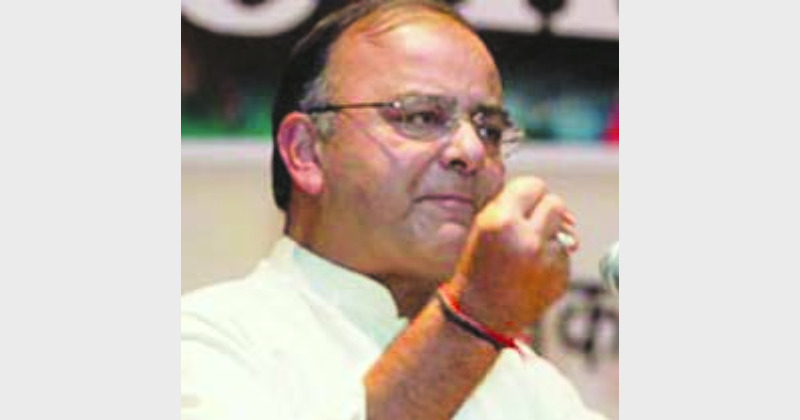
By Arun Jaitley

The Chief Minister of Jammu & Kashmir, Omar Abdullah has recently suggested that the provisions  of the Armed Forces (Special Powers) Act, 1958 could be made inapplicable to some parts of the State of Jammu & Kashmir.  This has triggered a controversy since the security forces and the Ministry of Defence have consistently maintained that the enforcement of the provisions of the Act in the State of J&K is necessary. It is, therefore, necessary to examine the provisions of the law and the need for their enforcement and applicability  to the State. 

Jammu & Kashmir has been a disturbed area for more than two decades.  It has been the victim of cross border terrorism.  Certain domestic groups have also disputed the status of the State as an integral part of India.  It is an effort of the entire country and the state administration  that peace and normalcy in the State should be restored and that the people of the State should be protected from any form of violence or subversion.  Terrorism and separatist violence needs both a political and security response.  The security response may adversely impact on the day to day civilian life.  It is harsh but necessary.  In case there is laxity in terms of security the inevitable consequences would be that deterrence of those indulging in violence and separatist activities would disappear.

Beside the State Police, the ‘armed forces’ of the Union  also assist the administration.  The ‘armed forces’ is not merely the army and certain other military forces but they also include other armed forces of the Union, namely, Border Security Force, CRPF, Assam Rifles and ITBP.  Once the whole State or a part of the State is declared as a ‘disturbed area’ the armed forces are called in aid of the civil powers  in  order to maintain peace and tranquility in the State. 

Armed forces do not investigate crime.  Their personnel are entitled to take necessary steps for maintenance of public order and use force after giving due warning to those who threaten law and order.  They can enter into a premises and search them.  They can destroy any dumps or fortified shelters from which armed attacks are made.  They are entitled to arrest without warrant and even take the arrested person to the nearest police station without delay along with a report of such arrests. Thus, with regard to declaration of an area as a disturbed area it is an assessment and opinion formed by the government  that the civilian administration and local state police are not enough to maintain the law and order in the State.  If the local police alone can maintain law and order  in the State, the declaration of that area as a disturbed area would not be necessary.  The decision thus to continue the State or a part of the State as a disturbed area  or otherwise has to be taken on security considerations and not political considerations. Even in districts where the army is withdrawn, the CRPF  and other armed forces are still deployed.  The local State police would be inadequate in most of these districts also.  The powers given to the armed forces of the Union are not substantially different from the powers which the local police has.  The local police can also make arrests, searches for the purpose of maintaining law and order.  They can also use  reasonable force required to maintain peace and tranquility.  They can also destroy any arm dumps or fortified positions or shelters from where armed attacks are made by violent groups. 

The only protection provided to the armed forces of the union is that before any prosecution, suit or legal proceedings is initiated against any personnel of the armed forces for acting under this Act, prior sanction of the Central Government would be necessary.  When I visited the State last year as a part of the all party delegation I was informed by the officers of the para military forces that more than 2500 applications for prosecuting personnels of armed forces were pending with the Central Government.  The Act, therefore, gives protection to the personnel of armed forces that they cannot be prosecuted without the sanction of the Central Government.  In case this protection is withdrawn it would empower various vested interests to prosecute officials of the armed forces and other para military forces indiscriminately.  Obviously, this would dis-incentivise  personnel of these forces from taking adequate steps against the separatist groups.  When the security forces are in favour of retention of this law,  it would be highly imprudent to allow anyone to seriously argue that political considerations require  that this law be withdrawn or its enforcement be restricted only to  certain areas.  We seriously hope that a situation does emerge in future that the applicability of this law is either not necessary or is restricted only to some areas.  That situation does not seem to have arrived as yet.  The withdrawal of this law would leave the administration  of the unprotected districts only in the hands of the local police and thus incentivizing the separatist and violent groups to increase their activities in these areas.  It would, therefore, be politically more prudent for the Chief Minister of Jammu & Kashmir not to initiate a debate at a stage when circumstances still warrant the continuation of the operation of the law. 

(The writer is Leader of Opposition, Rajya Sabha)?

ShareTweetSendShareSend
✮ Subscribe Organiser YouTube Channel. ✮
✮ Join Organiser's WhatsApp channel for Nationalist views beyond the news. ✮
Previous News

Advani lauds pious Travancore royal family?

Next News

China is tying itself in knots in Pakistan?

Related News

R. Sreelekha IPS (Retd.)

Kerala: Interview with R. Sreelekha IPS (Retd.) — BJP’s Thiruvananthapuram Municipal Corporation Candidate

How Nehru Torpedoed Vande Mataram: The Untold Story

Bangladeshi army officer and senior BNP leader Col Abdul Haque

A former Bangladeshi army officer & BNP leader urges youth to get army training to sever Northeast from India

PM Narendra Modi on Vande Bharat

“Removal of significant verses in Vande Mataram sowed seeds of partition”: PM Modi

West Bengal: Sanatan Sanskriti Sansad’s Gita Path Sees 6.5 Lakh Hindus Recite the Gita in Kolkata

(L) Panakkad Munavarali Shihab Thangal (R) Fathima Nargese

Kerala: Muslim League leader’s 16 years old daughter Fathima Nargese backs women entry into Mosques, father disputes

Load More

Comments

The comments posted here/below/in the given space are not on behalf of Organiser. The person posting the comment will be in sole ownership of its responsibility. According to the central government's IT rules, obscene or offensive statement made against a person, religion, community or nation is a punishable offense, and legal action would be taken against people who indulge in such activities.

Latest News

R. Sreelekha IPS (Retd.)

Kerala: Interview with R. Sreelekha IPS (Retd.) — BJP’s Thiruvananthapuram Municipal Corporation Candidate

How Nehru Torpedoed Vande Mataram: The Untold Story

Bangladeshi army officer and senior BNP leader Col Abdul Haque

A former Bangladeshi army officer & BNP leader urges youth to get army training to sever Northeast from India

PM Narendra Modi on Vande Bharat

“Removal of significant verses in Vande Mataram sowed seeds of partition”: PM Modi

West Bengal: Sanatan Sanskriti Sansad’s Gita Path Sees 6.5 Lakh Hindus Recite the Gita in Kolkata

(L) Panakkad Munavarali Shihab Thangal (R) Fathima Nargese

Kerala: Muslim League leader’s 16 years old daughter Fathima Nargese backs women entry into Mosques, father disputes

Pakistani traders protest mounting losses as prolonged border closures disrupt regional commerce and strain ties with Kabul

Taliban strike back as Pakistan border shutdown with Kabul choke trade routes and trigger protest at home

The doctrine of Geeta diplomacy

The Doctrine of Gita Diplomacy: Culture, strategy and the evolving global connect of India

Defence Minister Rajnath Singh speaks post inaugurating the infrastructure projects of BRO in Leh

Defence Minister Rajnath Singh hails the role of BRO in revolutionising communication & connectivity in border regions

Dismantling the threat of white-collar terrorism

The white terror module and the need for de-radicalisation of campuses

Load More
  • Privacy
  • Terms
  • Cookie Policy
  • Refund and Cancellation
  • Delivery and Shipping

© Bharat Prakashan (Delhi) Limited.
Tech-enabled by Ananthapuri Technologies

  • Home
  • Search Organiser
  • Bharat
    • Assam
    • Bihar
    • Chhattisgarh
    • Jharkhand
    • Maharashtra
    • View All States
  • World
    • Asia
    • Africa
    • North America
    • South America
    • Europe
    • Australia
  • Editorial
  • Operation Sindoor
  • Opinion
  • Analysis
  • Defence
  • Culture
  • Sports
  • Business
  • RSS @ 100
  • Entertainment
  • More ..
    • Sci & Tech
    • Vocal4Local
    • Special Report
    • Education
    • Employment
    • Books
    • Interviews
    • Travel
    • Health
    • Politics
    • Law
    • Economy
    • Obituary
  • Subscribe Magazine
  • Read Ecopy
  • Advertise
  • Circulation
  • Careers
  • About Us
  • Contact Us
  • Policies & Terms
    • Privacy Policy
    • Cookie Policy
    • Refund and Cancellation
    • Terms of Use

© Bharat Prakashan (Delhi) Limited.
Tech-enabled by Ananthapuri Technologies