BOOKMARK-2
December 9, 2025
  • Read Ecopy
  • Circulation
  • Advertise
  • Careers
  • About Us
  • Contact Us
Android AppiPhone AppArattai
Organiser
  • ‌
  • Bharat
    • Assam
    • Bihar
    • Chhattisgarh
    • Jharkhand
    • Maharashtra
    • View All States
  • World
    • Asia
    • Europe
    • North America
    • South America
    • Africa
    • Australia
  • Editorial
  • International
  • Opinion
  • RSS @ 100
  • More
    • Op Sindoor
    • Analysis
    • Sports
    • Defence
    • Politics
    • Business
    • Economy
    • Culture
    • Special Report
    • Sci & Tech
    • Entertainment
    • G20
    • Azadi Ka Amrit Mahotsav
    • Vocal4Local
    • Web Stories
    • Education
    • Employment
    • Books
    • Interviews
    • Travel
    • Law
    • Health
    • Obituary
  • Subscribe
    • Subscribe Print Edition
    • Subscribe Ecopy
    • Read Ecopy
  • ‌
  • Bharat
    • Assam
    • Bihar
    • Chhattisgarh
    • Jharkhand
    • Maharashtra
    • View All States
  • World
    • Asia
    • Europe
    • North America
    • South America
    • Africa
    • Australia
  • Editorial
  • International
  • Opinion
  • RSS @ 100
  • More
    • Op Sindoor
    • Analysis
    • Sports
    • Defence
    • Politics
    • Business
    • Economy
    • Culture
    • Special Report
    • Sci & Tech
    • Entertainment
    • G20
    • Azadi Ka Amrit Mahotsav
    • Vocal4Local
    • Web Stories
    • Education
    • Employment
    • Books
    • Interviews
    • Travel
    • Law
    • Health
    • Obituary
  • Subscribe
    • Subscribe Print Edition
    • Subscribe Ecopy
    • Read Ecopy
Organiser
  • Home
  • Bharat
  • World
  • Operation Sindoor
  • Editorial
  • Analysis
  • Opinion
  • Culture
  • Defence
  • International Edition
  • RSS @ 100
  • Magazine
  • Read Ecopy
Home Bharat

BOOKMARK-2

Opium drugs China-West relations still; now the other way round?

Archive ManagerArchive Manager
Oct 24, 2011, 11:07 am IST
in Bharat
Follow on Google News
FacebookTwitterWhatsAppTelegramEmail

Opium drugs China-West relations still; now the other way round?

By Dr R Balashankar?

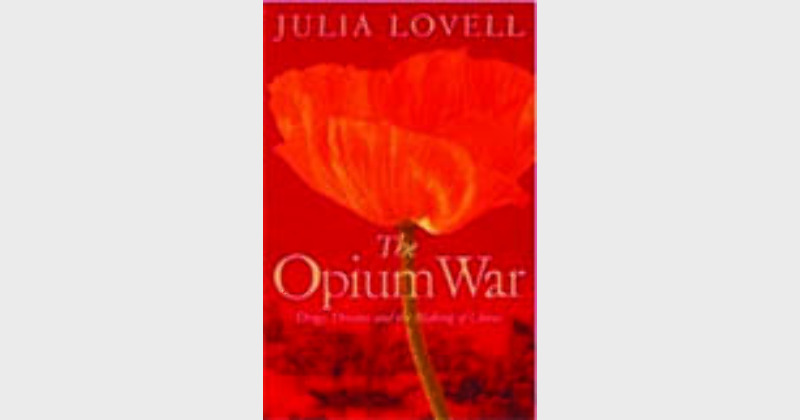
The Opium War: Drugs, Dreams and the Making of China, Julia Lovell, Picador, Pan Macmillan,   Pp 458(HB), £25.?

The West, led by Britain, prized open a treasure trove called China in the mid-nineteenth century. The objective was simple enough. To correct the trade imbalance between the East and West, which then was weighting heavily in China’s favour. The West succeeded and for the next one and a half centuries, the alien forces called the shots in China, which under the ineffective Qing dynasty and Manchurian rulers made feeble attempts to resist. This much of history is acceptable to all as part of the Opium Wars story. The point of divergence comes in contemporary China-West relations. The former is using this as a tool to drum up and infuse nationalism among the Chinese, with the latter crying foul over the exaggerations and what it perceives as vilification of a then legitimate trade attempt. After all, most European nations had used force for trade not only against each other but in several countries in Asia, and Africa, with India being the most obvious example.
Hence, Julia Lovell’s The Opium War: Drugs, Dreams and the Making of China has to be read from the angle of the story being told by the victor. ‘The’ in the title is emphasised by the author. Lovell takes the narration through the first moment when opium was zeroed in on as potential commodity to be sent to China to the series of moves that resulted in the first gunshot, the first incursion and the eventual ‘humiliating treaty’ signed by China, pleading for peace. On the other side of the tale is the inept, stubborn and secluded ruler of the Qing dynasty who had no clue on what was happening on ground, far far from the comforts of his palace. Most of the men appointed by him chose to feed him with lies, fearing his displeasure. Those who did venture were banished.
Lovell says that there was only one Opium War, not four as is usually believed. After the first war, the rest of the conflicts were fall outs or spiralling effects. The missionaries joined hands with first the opium smugglers and then the traders in their zeal to bring the Chinese into the line of ‘god.’ They were a powerful voice, in prodding their governments into launching action, to gain benefits for them, to build churches and preach freely. These concessions were obtained overtly and covertly in all the treaties that China signed with each of the invading army.
But Lovell is on another point. She says that the Communist Party that came to power has used the Opium War and the treaties to drum up nationalism. “Behind the screens of nationalist and imperialist legend, the Opium War and its afterlives expose the struggles and dilemmas that have beset the search for modern China: how Western misperceptions have fuelled China’s national myth; and how these myths have rebounded to mould China’s interactions with the West” she says. At the same time “In the Chinese narrative of the Opium War, you might expect the line between heroes and villains to be a clear one: Honourably resisting servants of the Chinese empire on the one hand, wicked British on the other. The curious thing is, though, how much of the venom in the Chinese version of the events has been reserved for characters on their own side: and in particular, for the perceived corruption, indecision and incompetence of the Qing court.”
And it was Sun Yat-Sen, the revolutionary who founded communism in China whose “late, ambivalent decision of the 1920s – taken in desperation to win Soviet funding for his faltering revolution – to name imperialism as the cause of all modern China’s problems that transformed the Opium War into the inaugural trauma of Chinese history, and into a vital ingredient of twentieth-century patriotic propaganda.” After him, all the mass leaders like Chiang Kai-shek and Mao repeated this line. Though in their ideology, they opposed consumption of opium, Lovell says they were all funded by the revenues earned from it.
In England, predictably, the political mood was largely in support of the Chinese war, with scattered weak voices questioning the morality of it. It was hailed as adding ‘increased luster to the glory of the British empire’ and giving equal benefit to the people of both China and England, by bestowing the ‘benefit’ of the western civilization and religion to the Chinese. The Times said “Was not the fire of London in 1666 a good?’ ‘Did it not lead to immense improvement?’ Such was the frenzy.
Zoom into the present. Lovell wanted to learn what the present day history learning is like. She visited a high-school to sit through a history class. Lovell says that at the end of the class, students discussing the lesson did not blame the foreigners alone. They very much took in the factor that the Chinese rulers had been blind, inept and uncaring. It is a fact that the rulers of China had been in a state of unpreparedness and slumber and reckless. But the fact is the West made the first move and ravaged China for the pieces of silver. Ironically, the nationalism that the present-day leadership is instilling among its citizens in China using Opium War is turning into a movement for democracy and transparency. How will the government handle it, like Tiananmen Square is a question being speculated.
“From the age of opium-traders to the Internet, China and the West have been infuriating and misunderstanding each other, despite ever-increasing opportunities for contact, study and mutual sympathy. Ten years into the twenty-first century, the nineteenth is still with us” concludes Lovell.
Julia Lovell teaches modern Chinese history at Birkbeck College, University of London and has authored several books on China. Dramatised scenes, immense research of events and clarity in narration make the book interesting. She begins with the present, takes us through the history of nearly 200 years and brings us back to the contemporary, giving a connect.
(Picador, Pan Macmillan,20 New Wharf Road, London N1 9RR)?

ShareTweetSendShareSend
✮ Subscribe Organiser YouTube Channel. ✮
✮ Join Organiser's WhatsApp channel for Nationalist views beyond the news. ✮
Previous News

BOOKMARK

Next News

BOOKMARK-4

Related News

Suvendu Adhikari hits out at Mamata Banerjee over absence from Bhagavad Gita event

Mamata Banerjee is anti-Hindu: Suvendu Adhikari after West Bengal CM skips mass recital of Bhagavad Gita in Kolkata

Bharat issues stern warning to China over Arunachal Pradesh

Arunachal Pradesh will remain an integral part of India: MEA warns China after detaining Indian in Shanghai

Chhattisgarh CM Vishnu Deo Sai with security personnel

Chhattisgarh: CM Vishnu Deo Sai hails surrender of top Maoist Ramdher, lauds valour of security forces

Representative Image

Indian Quantum Mission builds a strong environment for innovation, security & advanced research

Japan issues tsunami warning after back-to-back earthquakes over 6 magnitude hit off Aomori prefecture

Union Health Minister JP Nadda with Norway's Health and Care Services Minister Jan Christian Vestre

“The World has much to learn from India”: Norway eyes closer digital health partnership

Load More

Comments

The comments posted here/below/in the given space are not on behalf of Organiser. The person posting the comment will be in sole ownership of its responsibility. According to the central government's IT rules, obscene or offensive statement made against a person, religion, community or nation is a punishable offense, and legal action would be taken against people who indulge in such activities.

Latest News

Suvendu Adhikari hits out at Mamata Banerjee over absence from Bhagavad Gita event

Mamata Banerjee is anti-Hindu: Suvendu Adhikari after West Bengal CM skips mass recital of Bhagavad Gita in Kolkata

Bharat issues stern warning to China over Arunachal Pradesh

Arunachal Pradesh will remain an integral part of India: MEA warns China after detaining Indian in Shanghai

Chhattisgarh CM Vishnu Deo Sai with security personnel

Chhattisgarh: CM Vishnu Deo Sai hails surrender of top Maoist Ramdher, lauds valour of security forces

Representative Image

Indian Quantum Mission builds a strong environment for innovation, security & advanced research

Japan issues tsunami warning after back-to-back earthquakes over 6 magnitude hit off Aomori prefecture

Union Health Minister JP Nadda with Norway's Health and Care Services Minister Jan Christian Vestre

“The World has much to learn from India”: Norway eyes closer digital health partnership

The bronze statues at the Saraighat War Memorial Park in Agyathuri, Assam, commemorating the Battle of Saraighat

Decoding North East: The forgotten frontiers

HECI: Transformation through integration

The indigenous cocabulary of RSS reflects the spirit of nationalism and selfless service

Rashtriya Swayamsevak Sangh: Fostering inclusivity, collectivity & nationality with ingenious vocabulary of belonging

The bomb blast site near Red fort, Delhi
(Inset: Suicide bomber Dr Umar Un Nabi)

Anti-Terror Operations: Dismantling the terror web

Load More
  • Privacy
  • Terms
  • Cookie Policy
  • Refund and Cancellation
  • Delivery and Shipping

© Bharat Prakashan (Delhi) Limited.
Tech-enabled by Ananthapuri Technologies

  • Home
  • Search Organiser
  • Bharat
    • Assam
    • Bihar
    • Chhattisgarh
    • Jharkhand
    • Maharashtra
    • View All States
  • World
    • Asia
    • Africa
    • North America
    • South America
    • Europe
    • Australia
  • Editorial
  • Operation Sindoor
  • Opinion
  • Analysis
  • Defence
  • Culture
  • Sports
  • Business
  • RSS @ 100
  • Entertainment
  • More ..
    • Sci & Tech
    • Vocal4Local
    • Special Report
    • Education
    • Employment
    • Books
    • Interviews
    • Travel
    • Health
    • Politics
    • Law
    • Economy
    • Obituary
  • Subscribe Magazine
  • Read Ecopy
  • Advertise
  • Circulation
  • Careers
  • About Us
  • Contact Us
  • Policies & Terms
    • Privacy Policy
    • Cookie Policy
    • Refund and Cancellation
    • Terms of Use

© Bharat Prakashan (Delhi) Limited.
Tech-enabled by Ananthapuri Technologies